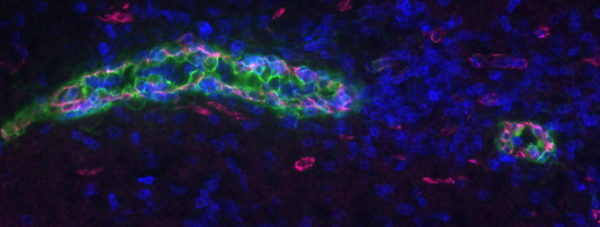
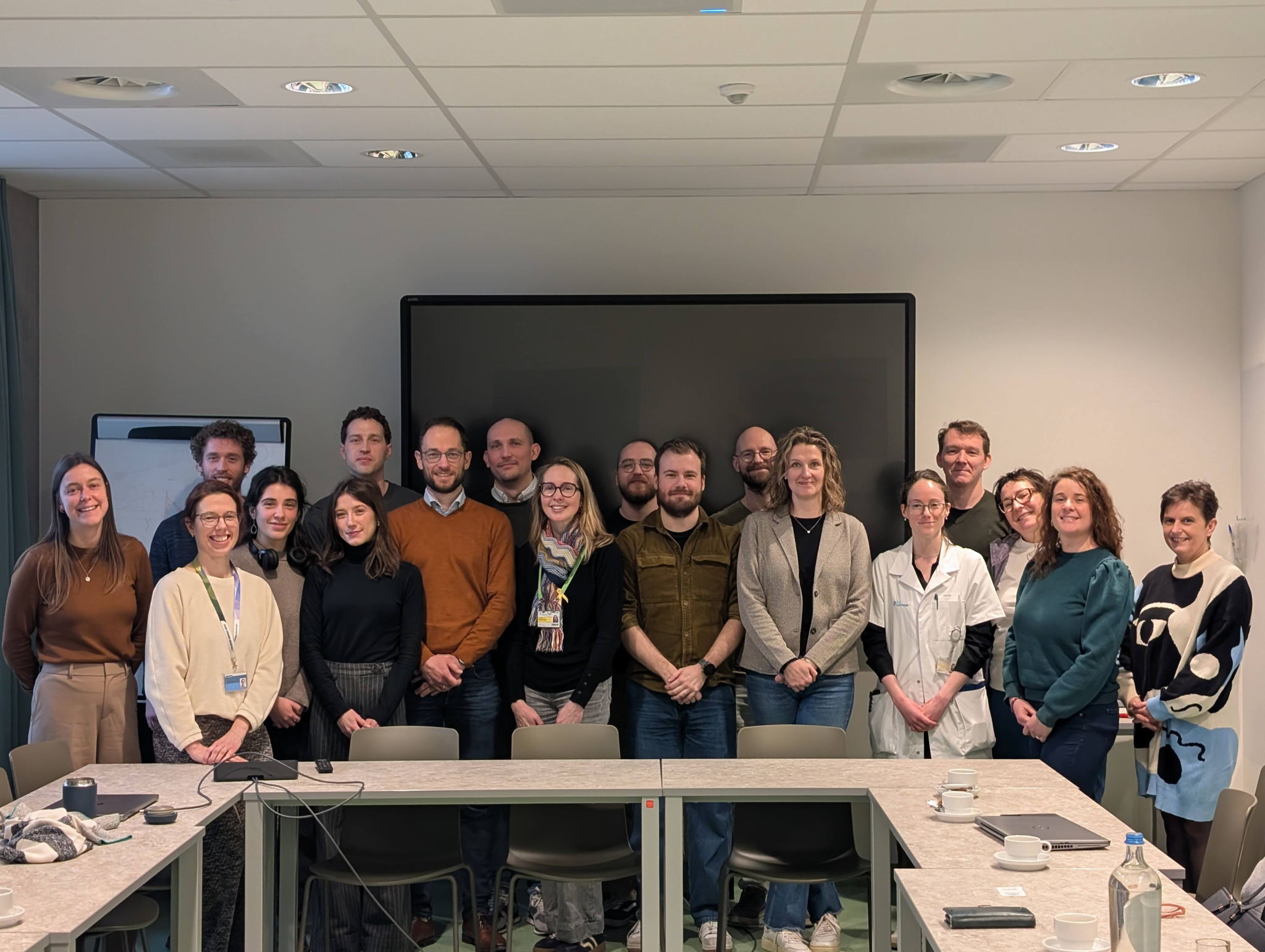
.jpg "The COMPASS team")
Rethinking sarcoma diagnosis: how COMPASS puts patients at the center
A VIB Grand Challenges project unites scientists, clinicians, and patients to transform how rare cancers are diagnosed
Sarcomas are rare cancers that develop in bone and soft tissues, from muscle and fat to connective tissue. They are not one disease, but more than a hundred different subtypes, each with its own characteristics and behavior. Their diversity and rarity make them particularly difficult to diagnose. For many patients, the path to a diagnosis is long and uncertain. Even in specialized hospitals, it often involves multiple tests, carried out separately, each providing only part of the picture. Still, the outcome is not always conclusive. In many cases, a clear diagnosis remains elusive.
Sarcoma Awareness Month is an opportunity to reflect on that reality, but also to highlight the efforts being made to improve it. At VIB, the COMPASS project, part of the VIB Grand Challenges Program, brings together scientists, clinicians and patients around a shared goal: to make sarcoma diagnosis faster, more accurate and more meaningful for those who depend on it.

How to profile a tumor
What sets COMPASS apart is a simple but powerful shift in perspective. Instead of examining tumors piece by piece, it aims to understand them as a whole.
Current diagnostic approaches rely on expert clinical and histological evaluation, increasingly combined with multiple separate high-level analyses of DNA, RNA, or proteins. Each layer offers valuable information but also leaves gaps. COMPASS brings these layers together in an integrated workflow that combines complete genomic, transcriptomic, and proteomic data into one coherent profile of the tumor.
This view creates new opportunities to identify biomarkers, refine diagnoses, and support clinical decision-making. Rather than navigating a series of disconnected tests, a tumor’s ‘profile’ equips clinicians with a more complete understanding of the disease they are trying to treat.
Behind that ambition lies a broader promise. By bringing together multiple layers of biological information, COMPASS contributes to the transition towards precision medicine, where treatment decisions are guided by the specific characteristics of each patient’s tumor.
Every July, the global sarcoma community comes together for Sarcoma Awareness Month — a dedicated time to raise awareness, increase understanding of sarcoma, strengthen community connection, and advocate for better care, earlier diagnosis, improved treatments, and more equitable access for all people affected by sarcoma.
In 2026, the theme of Sarcoma Awareness Month is the challenges of sarcoma patients, such as delayed diagnosis, difficulty accessing specialist care, limited research, and a sense of isolation.
Expanding collaboration, from clinic to patient
COMPASS is not only a scientific step forward. It also marks an important moment in the evolution of the VIB Grand Challenges Program.
For the first time, a Grand Challenges project includes a non‑VIB co‑promotor, Isabelle Vanden Bempt (KU Leuven, UZ Leuven), reflecting the essential role of clinical diagnostic expertise. At the same time, the project formally recognizes patient organization Cum Cura as a full partner.
“I think the best science is done by working together”, says promoter Jonas Demeulemeester, “and this is exactly what we need to tackle a disease as complex as sarcoma.”
“Our unique integration of scientific expertise and clinical diagnostics accelerates the journey from innovation to implementation," explains Isabelle Vanden Bempt, "ensuring that breakthrough technologies reach patients more quickly.”
Lina Vissenaeken and Stéphanie Anzellotti from Cum Cura agree, “When patients and researchers are equal partners from the start, science stops happening to people, it starts happening with them. In COMPASS, patients are no longer on the sidelines but at the very center of the process.”
Grand Challenges projects already start from real societal needs and bring together complementary expertise to address them. COMPASS extends that principle by embedding both clinical leadership and patient perspective at its core.
The involvement of Cum Cura ensures that the lived experience of patients is not something considered afterwards, but something that helps guide the project from the outset. It grounds the work in the realities of delayed diagnoses and uncertain outcomes and keeps the focus on what ultimately matters: giving patients clarity, sooner.
Cum Cura is the umbrella patient organization for people suffering from rare benign, locally aggressive, and malignant bone and soft tissue tumors.
Cum Cura supports people affected by rare tumors by providing reliable information, peer support, and updates on scientific advances. The organization unites several patient subgroups and advocates for patients, families, and healthcare professionals, while raising public awareness to improve understanding, quality of life, and access to care.
From data to decisions
Understanding a tumor at this level inevitably means working with large and complex datasets. The aim is not simply to generate more data, but to translate that data into insights that can support real decisions. By developing a streamlined workflow that integrates analysis and interpretation, the project seeks to reduce fragmentation and bring clarity where there is currently uncertainty.
This is where scientific and clinical ambitions converge. A more complete molecular picture becomes meaningful only when it leads to better-informed choices, such as a clearer diagnosis or a more appropriate treatment strategy.
A direction for the future
Sarcomas may be rare, but the challenges they present are profound. Improving diagnosis can fundamentally change how patients experience their disease, from the first consultation onward.
COMPASS connects laboratory research with clinical expertise, and anchors both in the reality of patient experience. In doing so, the project outlines a direction for how complex diseases can be approached in the future: integrated, collaborative, and centered on patient needs.
During Sarcoma Awareness Month, that shift in perspective matters. It reminds us that progress does not only come from new discoveries, but from new ways of working together and from the decision to place patients at the heart of the process.