.jpg)
A cross-center collaboration to tackle genetic epilepsies
An interuniversity project funded by the Queen Elisabeth Medical Foundation combines stem cell models and AI to study rare genetic epilepsies.
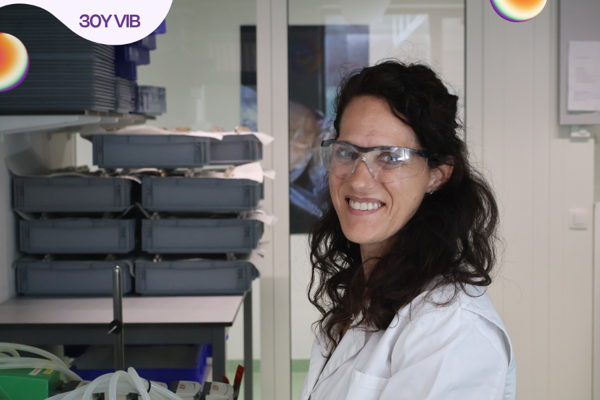
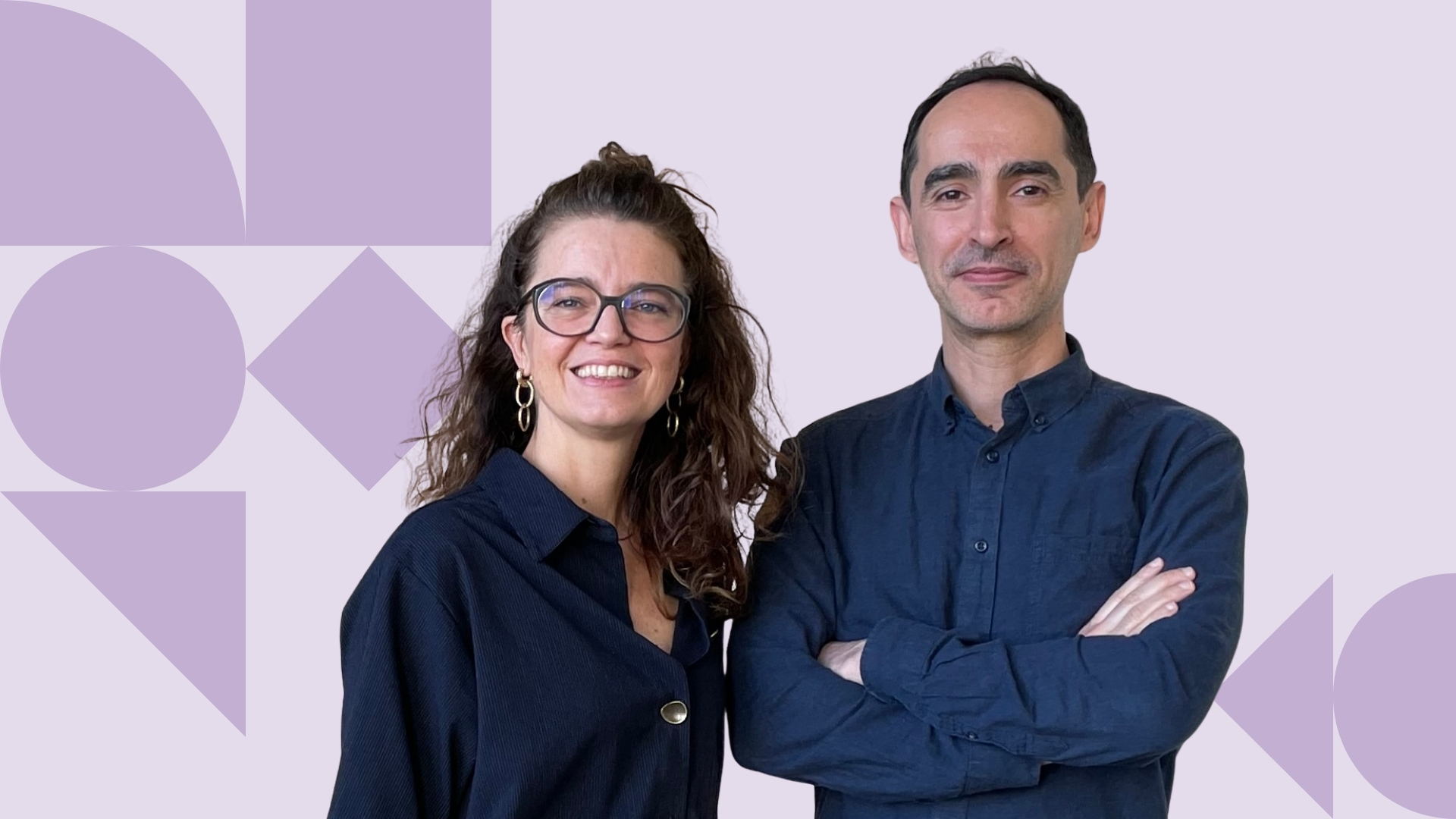
What happens when cutting-edge stem cell models meet advanced computational modeling? According to Sarah Weckhuysen (VIB-UAntwerp Center for Molecular Neurology) and Pedro Gonçalves (VIB.AI, KU Leuven), the answer might be a faster path toward new therapies for rare genetic epilepsies.
The two researchers have recently been awarded funding from the Queen Elisabeth Medical Foundation to explore this very question, bringing together experimental neuroscience and machine learning to better understand developmental and epileptic encephalopathies.
Untapped biological insights
In the Weckhuysen lab in Antwerp, researchers generate large-scale datasets from patient-derived neuronal models. Using stem cell technology, they recreate neurons from patients with rare genetic epilepsies and study their behavior using high-density multi-electrode arrays and transcriptomics.
These experiments produce vast amounts of data, capturing how neurons fire and interact as networks. While already highly informative, Sarah felt that these datasets still held untapped biological insights.
“We had the feeling there was more to discover in our data,” she explains. “That’s where Pedro Gonçalves’ expertise in computational modeling of neuronal networks perfectly fits in.”
The collaboration started when Pedro reached out to explore potential synergies between both labs.
“After our first discussion, it was clear that combining these approaches could open up entirely new possibilities,” he says. “It really feels like the beginning of something exciting.”
Different genes, shared mechanisms
The joint project focuses on two rare but severe forms of epilepsy: KCNQ2-related and SCN2A-related developmental and epileptic encephalopathy. Although caused by different genetic mutations, both disorders show remarkably similar clinical symptoms.
“Many of these disorders share downstream mechanisms such as hyperexcitability and excitation-inhibition imbalance,” explains Sarah. “This convergence opens opportunities for mechanism-based therapies that could target common network dysfunctions across genetic backgrounds.”
To do this, the team will generate co-cultures of excitatory and inhibitory neurons derived from patients with KCNQ2- and SCN2A-related encephalopathies, and compare them to matched isogenic controls. Using high-density multielectrode array recordings together with transcriptomic profiling, they will characterize both the molecular and network-level phenotypes of these models. These data will then feed into computational models designed to infer causal links between gene expression changes and emergent patterns of network dysfunction, and to predict which interventions might restore normal activity.

From insight to intervention
A key strength of the collaboration lies in closing the loop between experiment and computation. The team will build models that not only describe network behavior but can also predict how these systems respond to potential treatments. Promising interventions identified in silico will then be tested experimentally in the lab.
By directly comparing two genetically distinct disorders, the researchers hope to identify shared therapeutic strategies that target network-level dysfunction, rather than individual genes.
For both teams, this project is just the beginning.
“It’s a first step to demonstrate the power of combining our approaches,” says Pedro. “We hope it will grow into a larger collaborative effort in the future.”