.jpeg)
An EPIC research trip to Stockholm
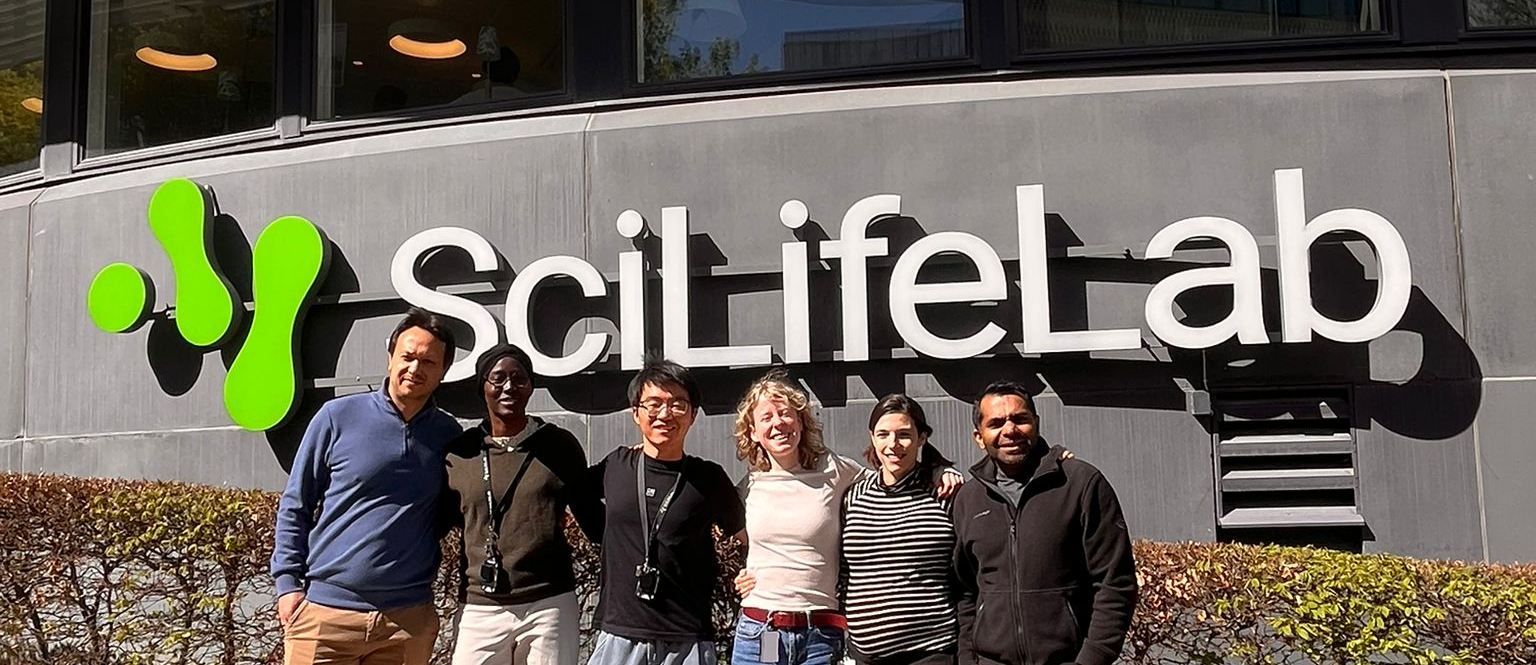
Eva Van Bun, PhD student in the Verstrepen lab, recently spent four weeks at the lab of Vicente Pelechano at the Karolinska Institutet in Stockholm, Sweden, to learn advanced methods for polysome profiling and RNA-sequencing. It was an intense month with long lab days, intense scientific exchange, new collaborations, and memorable Swedish traditions, all of which left her eager to return.
Eva Van Bun's path into research already started during her master’s thesis, where she worked on lactic acid production from lignocellulosic waste streams using K. marxianus. After finishing her thesis, she decided to stay in the Verstrepen lab and embark on a PhD.
“I really liked both the research and the people,” she says. “That combination made it feel like the right place to continue.”
Today, her PhD research is part of the ERC-funded EPIC project, which aims to unravel the eukaryotic post-translational code. In addition to the Verstrepen lab in Leuven and the Pelechano lab in Stockholm, the EPIC-consortium has a third member: the Gagneur lab in Munich. The three teams combine their expertise and infrastructure to study how cells regulate gene expression after RNA has already been produced. Eva’s project, more specifically, focuses on how ribosomes associate with RNA to control protein production.
A new method in a new setting
Eva was headed to the Pelechano lab at Karolinska Institutet to learn polysome profiling and RNA-sequencing methods that complement the work being done in Leuven.
“Cells from the same culture were split and analysed in parallel in Leuven and Stockholm. In Leuven, I tested a method to study mRNA-ribosome associations, while in Stockholm I performed traditional polysome profiling to benchmark this approach."
The Pelechano group has extensive expertise in sucrose gradient-based polysome profiling and RNA sequencing, Eva explains:
"I was able to go through the entire workflow, from cell lysis and RNA extraction to sequencing and downstream analysis. It was very valuable to learn not only the experimental side, but also get an idea of how the downstream analysis pipeline works.”
Of course, the plan differed slightly from the reality. “Our original plan quickly needed to be turned around, as it so often goes with experiments.” she laughs. “It was very hands-on and dynamic, which made it such a good learning experience.”
During the last few days of her month-long visit, Michael Abrouk, postdoc in the Verstrepen lab, also joined the team in Stockholm for several days to become familiar with the sequencing analysis workflow and to help establish a more uniform pipeline between both labs.
.jpeg)

A highly collaborative environment
Beyond the technical training, the research culture in Stockholm also made a strong impression. “The lab structure was very different from ours,” she explains, “with more postdocs and fewer PhD students, and an overall smaller group compared to in the Verstrepen lab.”
Instead of separate offices, around twenty researchers shared one large workspace, creating a highly interactive atmosphere. The laboratory spaces were also shared between multiple research groups, with different teams working side by side. Journal clubs and weekly departmental meetings brought together scientists across groups and scientific fields.
“That was really interesting because the research topics went far beyond yeast,” Eva adds. “Some groups worked on human biology and virus research, really broadening my perspective.”
“Everyone was constantly interacting,” she says. “Even as a ‘newbie’ joining for just a few weeks, I could easily ask questions to anyone who was around. Everyone was very open to help.”
That collaborative atmosphere turned out to be very valuable during difficult experimental moments. “When we ran into issues during the library preparation, people immediately started brainstorming together,” Eva explains. “Different colleagues joined in to help think through possible solutions. That kind of supportive environment was very motivating.”
From (lab) marathon to fika
The long workdays in the lab were balanced by weekends spent exploring Stockholm and Swedish traditions. In addition to exploring the lakes and forests of a nearby national park, Eva even found the time to run the Stockholm half-marathon!
.jpeg)


The research stay also coincided with Valborg, when Scandinavians traditionally celebrate the end of the long winter months with bonfires, singing and student celebrations. “It was really nice to experience that together with the team,” she says.


When it was time to leave, Eva’s new colleagues at the Pelechano lab organized a goodbye fika. “It was incredibly thoughtful,” she recounts.
Looking back, the stay gave her much more than technical expertise alone. Beyond learning new experimental approaches, it also showed her the value of different research environments and scientific cultures.
“It was very inspiring and energizing to see how another lab operates,” she says. Given the opportunity, she would not hesitate to return. “I would love to go back,” she says. “Honestly, every year if possible.”
.jpeg)

Lieselotte Vermeersch