Building belonging: Inside Leuven’s Inclusion & Diversity Committee
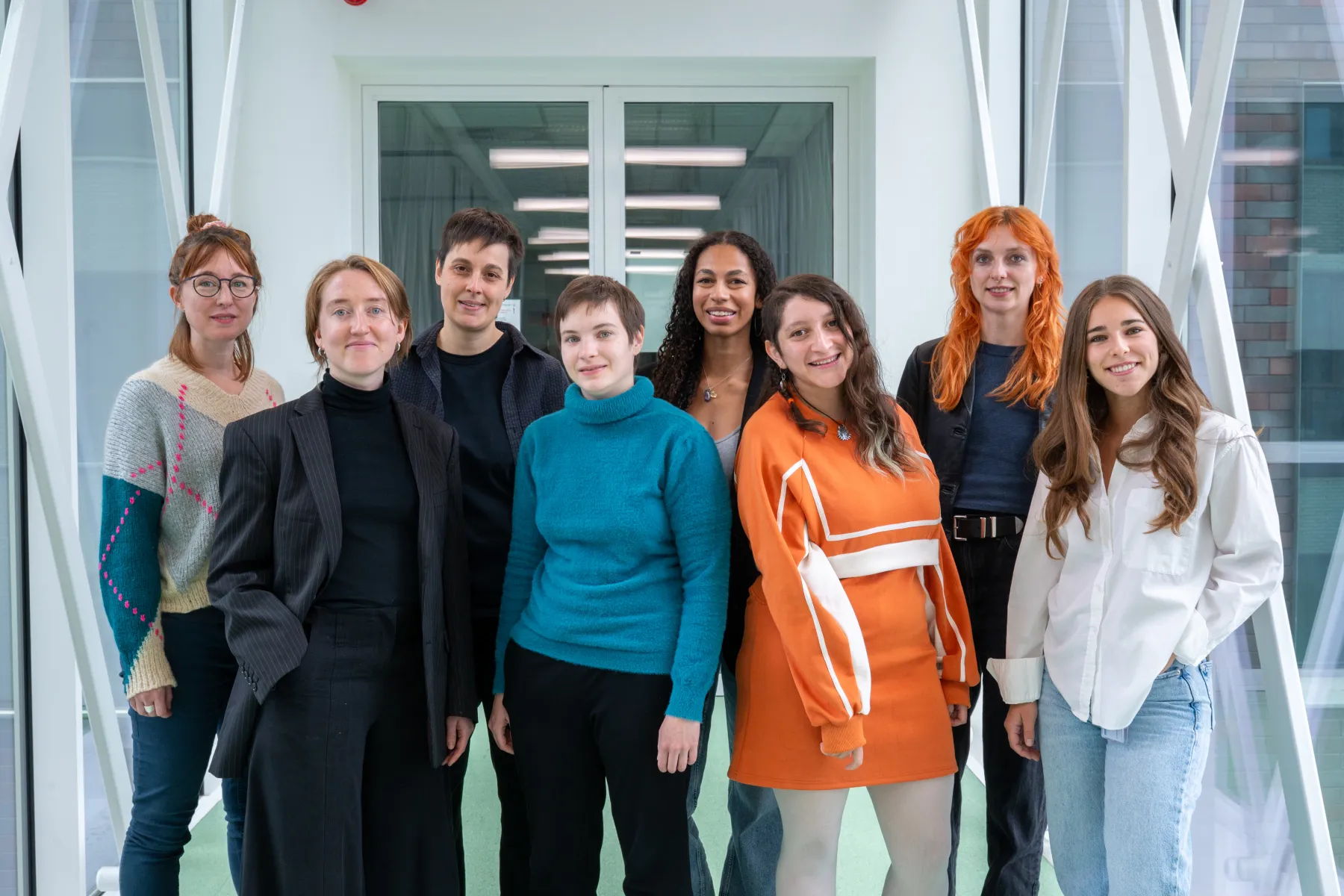
The Inclusion & Diversity Committee in Leuven has grown into a vibrant, grassroots community where researchers, technicians, and communicators come together to make science more human, connected, and welcoming.
In this conversation with Bethan Burnside, other committee members across the VIB-KU Leuven Center for Neuroscience, VIB-KU Leuven Center for Cancer Biology, and VIB.AI share how their personal experiences, values, and curiosity shaped their involvement; how they built a horizontal, self-driven structure from scratch — and why simple, joyful, relationship‑centered activities can create lasting cultural change in scientific environments.
What began as a small effort to rebuild an inactive committee has evolved into a dynamic network that hosts movie nights, happy hours, community lunches, morning raves, and creative events that spark conversation and belonging across the center.
Let's hear more from Inclusion & Diversity Committee members Anaí Echeverría Oviedo, Hannah Dickmänken, and Katarina Vrbnjak.

How and why did you get involved with the Inclusion & Diversity Committee?
Katarina: I’m from Croatia, and growing up there as a Queer person, I experienced a lot of prejudice. That was a driving force to get involved in LGBTQIA+ activism from a young age – volunteering at Pride, and in various Queer and feminist conventions. I got to know a lot of like-minded people, which was really uplifting. When I moved to Belgium, I wanted to keep that up.
Hannah: I’ve been a member of the committee since 2023. I’ve always enjoyed volunteering; I think it’s an important part of life. A key reason for joining the committee is the 'minority tax': the extra, often invisible burden placed on people from underrepresented groups to do diversity-related work, mentorship, and emotional labor on top of their regular jobs. I think it’s important that people who experience this are supported by people who are not as affected by it.
Anaí: I believe that before you’re anything else — whether that be a scientist, a student, a colleague — you’re, first and foremost, a person. I think being involved in the Inclusion & Diversity Committee encourages people to be more focused on the human part of research. In this way, the science becomes even more interesting to me, because you know the backstory. Another reason is that I’ve often been told, "You don’t look like a scientist," so it’s nice to have a space where you can look around and see that there are other people who look like you or have similar life experiences doing science too. Finally, I think that we’re creating a place where you can be more open about hardships and struggles and find support from others who might have had similar experiences.
We’ve had to create an Inclusion & Diversity Committee structure from scratch. Can you speak to that experience?
Hannah: We’ve experimented with a few different coordination approaches since I joined in 2023, which was part of a collective effort to reignite the committee after it had been inactive for some time. Over time, we gained the center’s trust, and more people joined, which enabled us to offer more activities for our community.
In addition, we have slowly transitioned to a very horizontal structure, which has worked very well in equally dividing responsibility. We’ve also tried out assigning roles to different people, but have learned it’s important that people really choose the roles themselves. For instance, we have some ADHDers in the group who opt out of taking meeting notes because they find it tricky to process audio information and write things down simultaneously.
We now have events that repeat regularly — movie nights, community lunches, and morning raves — which brings organizational relief, because we have a ‘script’ and only have to repeat what we’ve done previously. Another key change we’ve made is that we’ve switched format from lectures to more informal activities. For instance, in our last community lunch, we introduced an interactive activity whereby people could learn more about racial discrimination. We found that, as our researchers have so many lectures in their program anyway, they felt too saturated to add another to their agenda.
For example, people might not attend a talk about LGBTQIA+ rights if they are not from this community and are under the impression that these topics don’t concern them. But we recently organized a Drag Bingo happy hour, where we invited two Drag Queens to host the night, and it was one of our most attended happy hours at the center, ever. We had amazing feedback from people, saying things like: "This isn’t the kind of event I’d usually go to, but I learned so much."


A lot of science communication efforts stem from the premise of the information deficit model, which assumes that people don’t make scientifically accurate decisions or participate in scientifically correct behaviors because they don’t have their facts straight. But relationship-cultivating events — as opposed to more ‘preachy’ ones — often prove instrumental in facilitating real cultural change over time, and in fostering spaces where people feel that they can be vulnerable, ask ‘silly’ questions, and collectively figure out how to work better together.
Anaí: We’ve really tried to emphasize grassroots activities, rather than corporate-style interventions. Because the committee consists of real people who also work day-to-day within the center — scientists, research technicians, science communicators, and so on — our activities are truly created by, with, and for the communities we want to reach. And because of that, they’ve been incredibly effective. Because we’re so embedded, it’s quite simple, really: we do things that we like, and other people like it too!
It was also funny for me, because our two research centers recently merged into the VIB-KU Leuven Center for Neuroscience, and my PI was encouraging us to put ourselves out there and get to know other people in different labs. And even though I’m really shy, I actually already knew more people and had deeper connections than my colleagues through my engagement with the Inclusion & Diversity Committee!
Katarina: I want to wrap this question up by adding that it’s really wonderful to see how our efforts are uniting VIB across three different Leuven-based centers, because every time we host an event, people join from all over — and you end up meeting people you would’ve never met otherwise.
You started a new initiative recently, which is rather unusual: a morning rave! What led you to do this?
Anaí: The centers have organized happy hours for a long time, as a means of getting people together to socialize across labs. But these always take place on a Friday evening, when several people can’t join due to caretaking commitments, low energy levels, or working part-time. In terms of diversity, there are also people who feel more sociable or alert in the morning, so this gives an opportunity for those people to have fun and meet new people as well. I also think that moving can help your creative juices flow, which, in turn, can lead to better science!
Katarina: One of the driving forces behind the idea of the morning raves was to have a completely sober event, to be inclusive of people who choose not to drink. Diversity also involves a recognition and respect of people’s needs, and sometimes people want to party, but they don’t want to be around alcohol, and I think that’s important to acknowledge.
Hannah: We’ve had a lot of feedback on the morning raves from people who wouldn’t usually join the centers’ happy hours, who were able to participate. It ended up being a really different crowd from the people who regularly show up to our more traditional happy hours.

Who can join the Inclusion & Diversity Committee?
Hannah: I would really encourage anyone to join the Inclusion & Diversity Committee: even if you don’t have much time, I’m confident we can find a way for you to be involved — taking part as a core member, an organizing volunteer, or even just participating in events, really goes a long way in ensuring that we create a scientific environment that is welcoming of everyone.
Anaí: People tend to have a specific idea of the kinds of profiles that should join an Inclusion & Diversity Committee, but we want to emphasize that it’s really open to everyone.
Hannah: Exactly. For example, we often get the question: “If you’re a male, can you join? Isn’t it just something for feminists?” When in fact, anyone can — and, I would argue, should — get involved with matters of inclusion and diversity.
Katarina: We’ve got 'inclusion' in the name — it would be ridiculous if we didn’t include you! So, come and hang out.
What professional skills have you gained from being part of the Inclusion & Diversity Committee that you don’t get to exercise as much in your scientific work?
Katarina: We have more interaction with the 'powers that be' than we would in our formal roles — as we navigate things like budgeting, ordering, and invoicing — which was completely alien to me before joining the committee, and nudges me to step out of my comfort zone. That’s a transferable skill that’s going to be useful for my career going forward.
Anaí: What I’ve improved a lot in is my organizational skills. In academia, we practice this to an extent, but we’re often working across longer timelines — like a PhD, for instance. In the Inclusion & Diversity Committee, we often have a lot to do in a short span of time, which exercises a different set of coordination capacities. You have to think in terms of project management: “This needs to be done by then, so x, y, and z things need to be ready by x…”
Hannah: I’d say the teamwork aspect of it, because while there is an extent of it in the lab as well, I don’t think we practice it as actively as we do in the Inclusion & Diversity Committee. I think that being in the committee has also forced us to get rid of my perfectionism, because other people will inevitably do things differently from how you might have chosen to do it, and that’s totally OK — and sometimes even works out better! I think that’s an invaluable learning opportunity for everyone, and a super important skill to learn as a researcher. I’ve also really been enjoying learning from other people, through interacting with people who are completely different from me, in completely different roles, or with completely different backgrounds.
This conversation has made me feel very warm and fuzzy. It’s so wholesome! If people at other research centers are interested in starting a similar initiative, what advice would you give to people wanting to create their own Inclusion & Diversity Committee?
Hannah: In our experience, it’s really helpful to have different teams responsible for different events. Some members are more involved in organizing the movie nights, others are responsible for the library, or the lunches, or the raves. Commitments are, of course, always open to renegotiation at team meetings. While our structure remains horizontal, we have found it helpful to have a few members who act as the point of contact for people in management and admin, as well as one or two designated points of contact per center, to make it easier for people to get in touch.
Katarina: I really enjoy our approach of self-assigning roles dynamically. I love event planning, so I always jump on organizing the movie nights that we’re doing, while other committee members find that stressful. If someone else wants to have a go, they’re more than free to voice that, and I’m happy to train them in the role.
Anaí: I really value the transfer of knowledge. For instance, I was always interested in being involved in the movie nights, but didn’t feel confident taking the lead at first. So, for the first year, I helped out more behind-the-scenes, and as I became more confident, I learned how to take on more forward-facing tasks. Meanwhile, with the community lunches, I was an expert at organizing these, and it was a real pleasure to show others the ropes and facilitate a smooth role transfer. I would also add that we’ve managed to build a lot around a little — I want to emphasize that you don’t need a whole lot of resources to get started.
Hannah: For me, being part of the committee has been a great exercise in dynamic leadership, and in learning to let go of certain things and trust that other people can handle it. Science is also teamwork, and being part of this committee has taught us a lot about how to rely on other people and work efficiently and respectfully together as a group. We’ve also learned that it’s the responsibility of everyone to notice when someone has the tendency to take on a lot, and to try and spread this out evenly among the group.
Anaí: It’s a bit of a shift from our typical way of thinking in science, where we’re always searching for the latest tools or the most cutting-edge research. In our work in the committee, though, sometimes the simple, intuitive ideas work best. And we’re learning to lean into our intuition more, because we’re inside the system we are also operating within, and we have to trust that we know what’s best for our own community. We’re also not expecting fast results: we’re here for the long haul, to put in the effort, build relationships, and gain confidence over time.
Find out more about the Leuven division of VIB’s Inclusion & Diversity Committee here!

Bethan Burnside