Science with values at its core
Called to Science with Ruben Vazquez-Uribe
VIB’s podcast Called to Science is back for a second season! In this series, we sit down with researchers to go beyond the research to explore the passion, setbacks, and big questions that drive them forward.
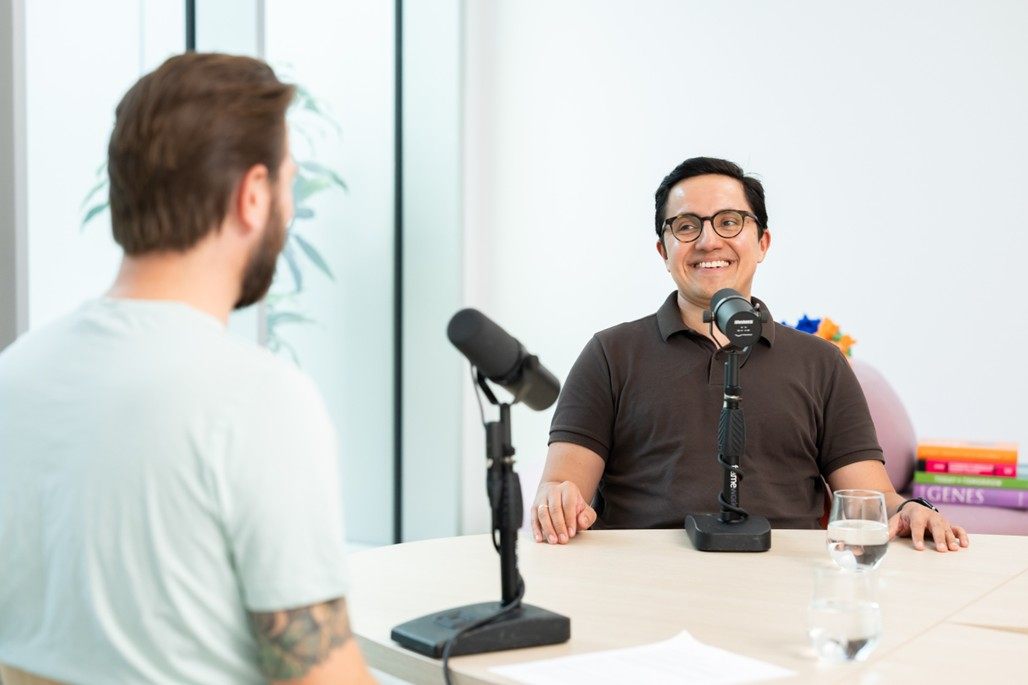
In one episode of season two, science journalist Brad Van Paridon speaks with Ruben Vazquez-Uribe, Scientific Project Manager at the VIB-KU Leuven Center for Microbiology. They talked about the importance of using science for good, bringing values to research, and research to the kitchen. Here are some highlights from the discussion.
Curious about the other guests? Check out the full series on Spotify, Apple Podcasts, YouTube, or wherever you get your podcasts.
Hi Ruben, you grew up in Mexico City. What inspired you there to do what you do now?
Ruben: “I love Mexico, especially Mexico City. I think it's the coolest city in the world. But it also has a lot of challenges, especially when I was little. But I think the conditions have been slowly improving in the city. And part of that is because they implement not only new policies, but also technologies. I was very inspired by that. I want to be able to develop technologies that can help people, especially in cities, to live more sustainable and better quality lives. It's still a long way to go for a city like Mexico City, just because it's massive. But I do think that with technology, we can have a lot of positive impact.
And I think there is a lot of potential to exploit microbes to solve problems. It feels almost like an untapped resource, right? Or not enough at least. We use it a lot, for example, for wastewater treatment or for food production, but we can do so much more. Especially now that we have the synthetic biology part and genetic engineering tools. We could use them to produce any molecule that you can imagine. You could use them to produce functions that they didn't evolve to do, but that could solve some of the biggest problems that we have nowadays.”
In your nine-to-five job life here at VIB, you’re working with fermentation. But as I understand it, you’re also experimenting with fermentation in the kitchen. You make some traditional Mexican fermented dishes, but you also said you’ve done some experimental ones?
Ruben: “Yes! Experimental ones in the sense that I also like gardening. I grow a lot of chillies. This year, I grew 27 different varieties. I want to ferment them because it combines the two things that I love: microbes and gardening. I try different recipes and sometimes they taste like shoes [laughs]. But sometimes they turn out well, and it's actually really nice.
I experiment a lot. I also like to dig in and look for recipes from many years ago that perhaps died out. A Mexican one, Pozole, for example, uses cacao and corn. In some indigenous communities in Mexico, people still drink it, but only there. I'm just very curious to see why they have kept it, but also how it tastes. It's just my way of keeping some of these traditions alive.”

One of the things that I also really want to ask you about is values. This seems to be something that you think about a lot, and that is important to you. I heard you do an annual reflection on your values and sometimes test drive new ones. Why is this something you want to put a focus on?
Ruben: “I like to use my birthday as a time to reflect on things that I can improve in my life. Values are very important to me because they help me make decisions. When I'm confronted with a career or personal decision, I try to see what the things are that really matter to me. I try to rank them and to focus on the important ones. For me, the number one is family. Family and friends are the most important thing for me. Whenever I make a decision, that's the value that points me in the right.
Another value that is important to me is compassion or kindness. If I can help someone at work, be it a PhD student who is struggling with too much stress, or a wider issue like improving the quality of food in Belgium so that people have a lower risk of developing some diseases.
I try to use my values to guide my decisions and what I want to focus on. Sometimes you walk around in life without knowing what things you actually care about. You make decisions just because of the momentum. I don't think that we often stop to think, “Does that align with my values?” Does that align with the things I care about?”
To hear the full conversation with Ruben Vazquez-Uribe, listen to the complete episode of Called to Science on your favorite podcast platform.
About the podcast
Called to Science is produced by VIB. Each episode features candid conversations with scientists and innovators, exploring the personal stories behind scientific careers and discoveries. Check out the full series on Spotify, Apple Podcasts, YouTube, or wherever you get your podcasts.