Electricity within the brain: Electrophysiology in neuroscience
At the interface where electrical signals meet the structural complexity of the brain lies the field of electrophysiology. By measuring and manipulating electrical properties of cells and neural circuits, electrophysiology reveals how biological systems function in real time and how molecular and cellular changes translate into behavior and disease. Electrophysiology enables us to study these electrical phenomena in great detail and allows us to understand how electrical signals are used in biology.
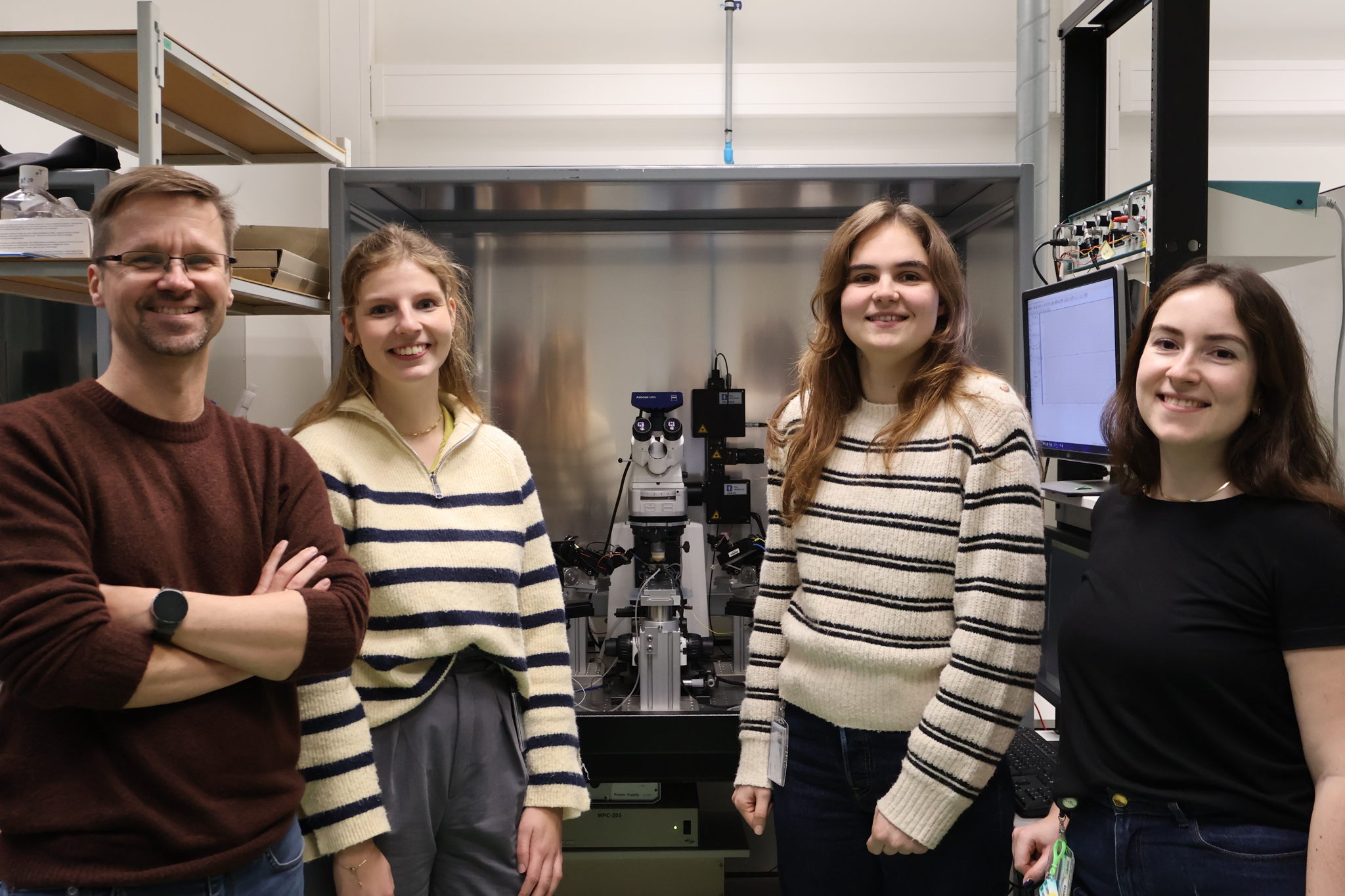
Electrophysiological research relies heavily on advanced, hands-on technology and deep technical expertise. We spoke with Keimpe Wierda (KW), head of the Electrophysiology Expertise Unit at the VIB-KU Leuven Center for Brain & Disease Research, about his path into electrophysiology, the vision behind building a centralized expertise unit, and how cutting-edge recording platforms are positioning the unit as a fundamental attribute to the world-class neuroscience research in VIB-KU Leuven. Joining him are Ine Vlaeminck (IV), Malou Reverendo (MR), and Lise Vervloessem(LV), technicians at the unit.
Hello, everyone! What got you interested in electrophysiology?
KW: During an internship, my tutor mentioned electrophysiology as a niche method that would connect with me. Intrigued by his remark, I started looking for information online and it instantly grabbed me. A second internship focusing on electrophysiology followed around 2001, so about 25 years ago. I was hooked and continued using electrophysiology as the primary method of investigation.
Electrophysiology requires patience, resilience, stubbornness, and almost limitless persistence. This was - and still is - highly appealing to me. Beyond experimental work, I repeatedly built and adapted complex electrophysiology systems during my PhD and postdoctoral work. This combination developed my technical and experimental awareness, which gradually positioned me as an expert.
IV: It spoke to me because of the unknown. I did not know anything about electrophysiology, just glimpses during some courses. It seemed so out of reach, but when I came here, I was really amazed by the technology, and I thought, I need to know how to do this.
LV: I already started being interested in neuroscience during my bachelor. During my Erasmus exchange in Norway, I followed courses with electrophysiology topics. I was very intrigued, so when I saw a job opening at the electrophysiology unit, I applied immediately. The opportunity to learn something complex and unique drew me in.
MR: This environment allows me to do something I didn't know anything about, and I really wanted to learn it. It started so challenging, I felt like I was never going to be able to patch a cell. But then, suddenly, it clicked. I think it's a unique skill set that not everyone can master, and it does take a lot of time to acquire.

Recently, the team used glutamate uncaging onto individual spines on dendrites of neurons that were simultaneously recorded. This type of experiment can only be done in such a system since both identifying the spines and uncaging glutamate require 2P excitation.
Can you describe the history and role of the Electrophysiology Unit?
KW: At the end of 2013, I was a post-doc in Copenhagen (Denmark), looking for positions. I knew Joris de Wit started his group in Leuven, and after contacting him, he mentioned that the center was playing with the unique idea of establishing an electrophysiology expertise unit. This was ambitious. Being able to establish and maintain such a facility requires a broadly competent person experienced in many aspects of the methodology. I was quite knowledgeable, but honestly, this assignment scared me. So naturally, I took it. We started small, but progressively grew based on the needs of different research groups in de department. The number of requests increased and became unmanageable as a one-man show. We required additional electrophysiology staff. I decided to try mentoring technicians towards becoming electrophysiology experts in their own right. Finding the right people is key, and I have been very lucky with this.
We provide research groups with the opportunity to integrate electrophysiology into their projects, allowing direct measurement and manipulation of the electrical properties of a broad scope of biological processes, from single channels, individual cells, all the way up to large cohorts of neuronal networks. It is a crucial method to determine the functional consequences of cellular perturbations studied in our center.
Currently, there are only a few organizations in the world that, to some extent, offer something comparable to our electrophysiology expertise unit in CBD. What we have here is really quite unique and I am truly proud of it.

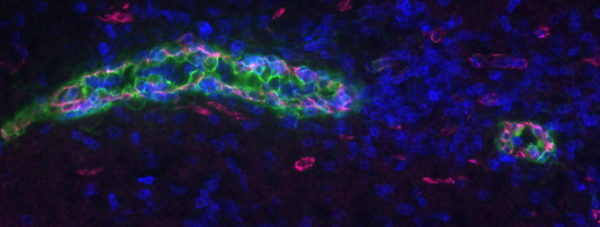
Here we can target one or two neurons with a glass micropipette and record cellular and network properties. Combined with fluorescent imaging and optical or extracellular stimulation, we can generate multilayered insights in physiological processes while controlling the activity of defined pathways and observe how the recorded neuron(s) respond.
How does electrophysiology support biomedical research?
KW: Electrophysiology plays a central role in biomedical research because it gives direct insights into how specific processes function under normal conditions, how diseases alter these functions, and how new therapies can restore them.
Nearly all collaborative projects are disease-related. We often compare control conditions with genetically modified models linked to disease. For example, we study synaptic plasticity changes related to tau hyperphosphorylation or lysosomal dysfunction in neurodegenerative Alzheimer’s disease models.
And what are the biggest challenges?
KW: The scope of electrophysiology is a major challenge. Experimental approaches vary widely depending on the research question, requiring extensive testing and validation. Additionally, electrophysiology is low- to medium-throughput; each cell needs to be recorded with a pipette and not every attempt is successful. So having skilled people working in the expertise unit is a fundamental requirement to move forward efficiently.

We can listen to synaptic input received by the recorded cell in culture. By comparing mutants or treatments that affect the communication we can learn how cultured neurons form these connections and what determines their efficiency. Combined with calcium imaging, we are able to visualize activity in neighboring cells allowing parallel monitoring of neuronal activity and synaptic release in real time.
IV: In the past few years, the number of collaborations has increased significantly. That's why we are with four people now. We are exposed to a wide range of research questions - from neurodegeneration to sleep and development - focusing on different brain regions, requiring different approaches. This variation is both challenging and satisfying, so many techniques that we can master.
LV: Keimpe coordinates most of the planning and organization. Sometimes a project has to be prioritized due to resubmission time constraints, availability of unique mice, or the need to be a certain age. Managing this can be challenging.
MR: Electrophysiology is a bit unpredictable. There is always a new challenge, which is nice. I know the basics, but there is still much more room to grow further. That is a challenge, yet at the same time that is what I really like about it.
Do you feel valued as technicians within the center and what would you like to achieve next?
IV: We feel highly appreciated. Every time we do recordings for people, they are always very grateful to us. And our contributions are acknowledged through authorship on papers. Next steps for me are further developing my skill set. There are several exciting directions the unit is moving toward. For example, the setup to patch eight cells simultaneously is going to be exhilarating to work with.
LV: Working in this unit allows us to support many researchers, develop rare skills, and continuously learn. We are also very appreciated by the researchers we work with, making our job not only interesting but also enjoyable. Looking ahead, I would like to broaden my experimental toolset and gain more experience with complicated experimental setups.
MR: I agree. I've worked here for a year now and am starting to feel I ready to do patch clamp. The feedback on contributions to projects has been very motivating. Currently, I am trying double recordings, one of many additional skills that can be learned.

What are your goals for the next five years?
KW: In the short term, we aim to implement a multi-patching system capable of recording from 8 cells simultaneously. This will allow us to investigate connected microcircuits in mouse and primary human tissue from the clinic. Integration of signals in these microcircuits can lead to insights into network processing and plasticity on a microcircuit level. We also plan to expand high-density multi-electrode array recordings in brain slices. This will allow large-scale recordings of neuronal activity across entire networks at single-cell resolution, complementing the detailed microcircuit approach of the multi-patch system.
Long term, integration of fluorescence-based voltage imaging could be interesting to monitor the behavior of individual cells within networks. In addition, in vivo whole-cell electrophysiology would be an interesting addition to our experimental repertoire. And expanding our collaborations with in vivo-focused groups, such as the Haesler, Farrow, Urban, Bonin labs and the in vivo neurophysiology expertise unit.
Initially, establishing the unit felt risky and maybe a bit overly ambitious. Looking back after more than ten years, it turned out to be very successful and has become a true integral part of the center. I am proud of what we have built and look forward to continue developing this further. Our aim is to continue making important contributions to the high-quality neuroscience research from within our center.
Want to be kept up-to-date on our biotechnological news and stories? Join our community and subscribe to our bi-monthly newsletter.