From discovery to diagnosis: turning research insights into tools for patients
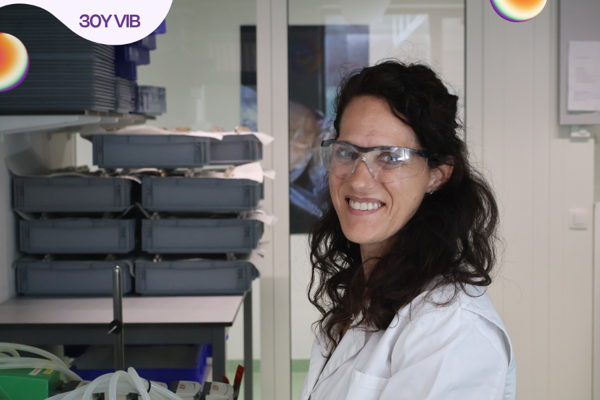
An interview with Siele Ceuppens, Senior Scientist at VIB Discovery Sciences
A promising scientific discovery in the lab does not automatically translate into a tool that doctors can use to treat patients. Between those two stages lies an important step: transforming research insights into reliable diagnostic tests that work in real-world settings.
At VIB Discovery Sciences, Siele Ceuppens works precisely at that interface. As a Senior Scientist specializing in biomarkers and diagnostics, she helps convert promising research methods into robust tests that can support drug development and guide treatment decisions. In collaboration with academic researchers and industry partners such as argenx, her work contributes to bringing precision medicine closer to patients.

Hi Siele! Let's dive right in. What motivates you, and why did you choose this field?
Earlier in my career, I enjoyed working in smaller biotech companies that were in a start-up or scale-up phase. Those environments require a lot of initiative and creativity—you constantly encounter new problems that need practical solutions.
Working at VIB feels similar in many ways. Change is constant, and there is always something new to learn or implement. Because we closely follow the latest scientific developments, the work never becomes routine.
Each year we also supervise internship students who join our projects for several months. That is something I really enjoy. We can share our experience with them, but they also bring fresh perspectives and ideas.
What makes your role (and that of Discovery Sciences) unique?
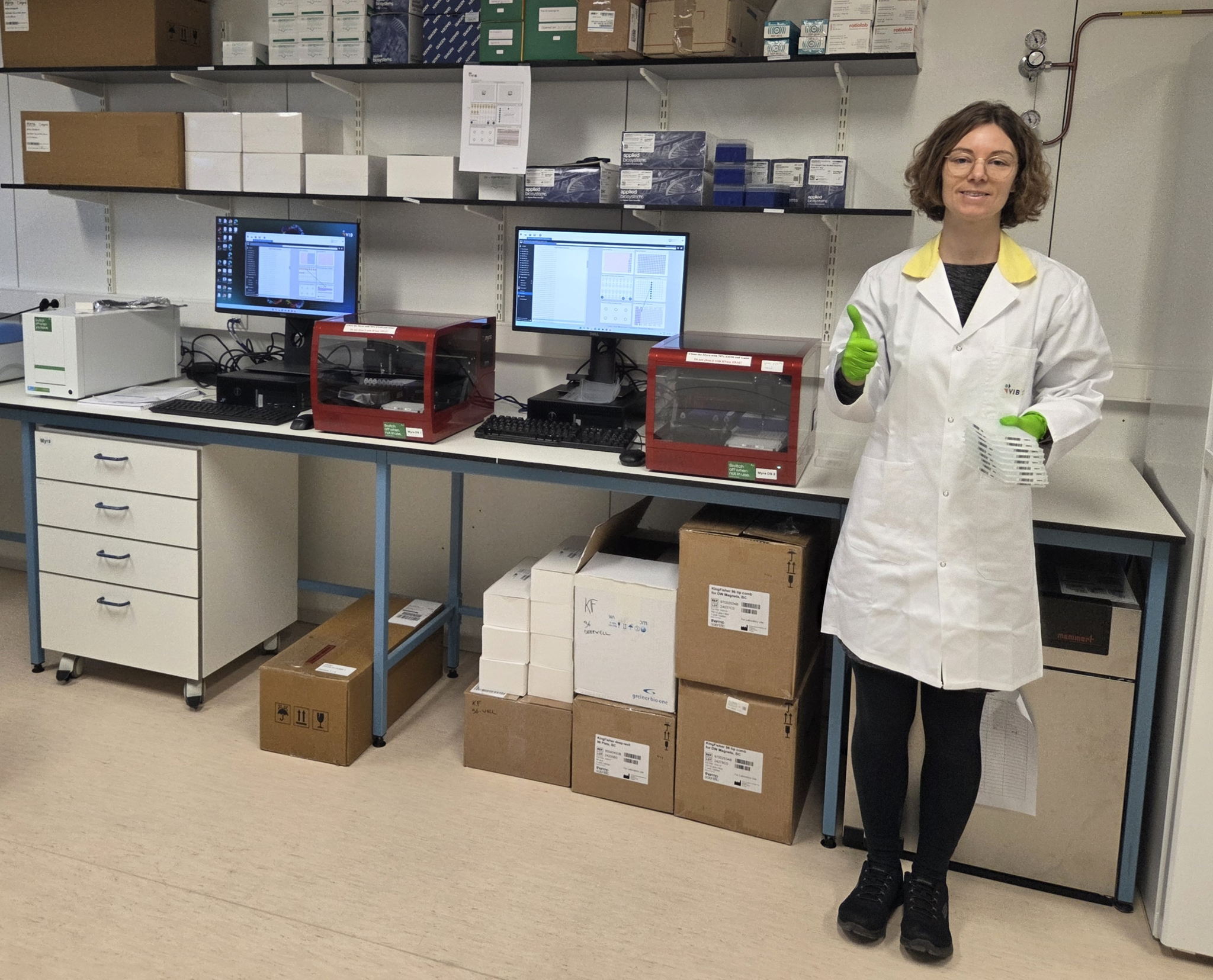
Together with my colleague Sirima Kraisin, I form the biomarkers and diagnostics group within VIB Discovery Sciences. The team was created about four years ago to strengthen the translation of research discoveries into practical diagnostic tools.
Our role is to take research tests developed in academic labs and transform them into diagnostic tests that can be used reliably in real-world settings. This often means redesigning or optimizing the test so that it becomes more stable, robust, and practical for routine laboratory use.
Commercial partners and clinical laboratories also have specific requirements, such as cost efficiency or compatibility with existing workflows. We help integrate those aspects into the design.
Before joining VIB, I worked in medical device companies developing diagnostic tests. That experience helps me anticipate the practical aspects that are important when turning a promising research method into a reliable diagnostic tool. I prefer to test things thoroughly and aim high from the start, because it helps prevent unexpected problems later on.


What do you find most interesting or motivating about your work?
One of the most rewarding aspects of working at VIB Discovery Sciences is the variety.
Projects typically run for one to three years and can focus on very different diseases—from lung disorders to immune diseases or microbiome-related conditions. Each project also involves different laboratory techniques and scientific questions.
The work builds on years of high-quality research carried out in academic labs, so we start from a strong scientific foundation. At the same time, there are always technical challenges and unanswered questions that keep the work interesting.
Because every project and every user is different, there is rarely a standard approach. Researchers, clinicians, and companies all have different priorities. Finding the best solution often requires creativity and close collaboration.
Can you share how you were involved in the collaboration with argenx?
In the Gal10 project with argenx, researchers were developing a new drug for a subgroup of patients who do not respond sufficiently to existing treatments.
At the same time, it was important to identify which patients would benefit from this therapy. I therefore started developing a biomarker test that could detect the relevant biological signal in patient samples, while the drug itself was still in preclinical development.
Combining a new therapy with a diagnostic test that helps select the right patients makes the overall approach much stronger. It is a clear example of precision medicine, where treatments are tailored to specific patient groups.
With which partners inside and outside VIB did you collaborate?
Every project we work on involves at least one VIB research group, meaning we collaborate closely with the principal investigator and their team.
Often there is also an external company involved, for example a partner that may want to license the diagnostic test we are developing.
Access to high-quality patient samples is another key element. When I started, VIB did not yet have its own biobank, so we collaborated with partners such as the biobank at the University of Antwerp. Today we also function as a biobank hub ourselves, which allows us to collect and use human samples for test development.
We also regularly consult physicians and clinical experts outside VIB. Their insights into current diagnostic practices and clinical needs help ensure the tests we develop will be useful in real healthcare settings.


How do you see the possible impact of your work on science, society, or patient care?
For me, one of the most motivating aspects of the job is helping move scientific discoveries beyond publications and toward real-world applications.
When research results are translated into practical tools—such as diagnostic tests or new therapies—they can directly benefit patients. At the same time, successful innovation can generate new resources that help support further fundamental research.
Some projects are primarily driven by societal impact rather than financial return. One example is the PID2.0 Grand Challenges project, led by Rudi Beyaert at VIB together with Filomeen Haerynck from Ghent University Hospital. The goal is to develop a diagnostic test that could shorten the often years-long search for a correct diagnosis in patients with rare immune disorders. Even though the number of patients is relatively small, helping them avoid years of uncertainty and complications would make a meaningful difference.
Thank you, Siele!
EXAMPLE PROJECTS OF SIELE AND COLLEAGUES
- Gal10 biomarker project
In collaboration with Bart Lambrecht and argenx, this project focused on developing diagnostic assays alongside the development of a new drug targeting a specific patient subgroup. Because no suitable commercial test was available, the team optimized a Gal10 ELISA assay and adapted it for different patient sample types such as plasma, serum, sputum, and bronchoalveolar lavage fluid. In addition, they developed a dried-format ELISA kit to detect auto-antibodies against Gal10, which was successfully used by international collaborators to analyze clinical samples.
- PID2.0 Grand Challenges project
Together with Rudi Beyaert and Filomeen Haerynck, the team worked on improving diagnostic tests for rare immune disorders. Existing research assays were redesigned to ensure reliable detection of relevant gene variants while avoiding interference from genomic DNA. Additional reference genes were evaluated to guarantee stable results across different patient groups, and practical aspects such as laboratory workflows and cost considerations were taken into account to enable implementation in clinical settings.
- B2 enterotyping project
In collaboration with Jeroen Raes, a microbiome sequencing research test was translated into a faster standardized qPCR test. The project also addressed practical challenges in sample handling by developing a protocol that allows stool samples to be collected at room temperature rather than requiring frozen transport. Removing this logistical barrier makes the test much easier to implement in routine clinical practice.

Gunnar De Winter