How microbiome research is moving from discovery to impact
What if the key to understanding diseases like cancer, Parkinson’s, or even depression lies not just in our own cells, but in the trillions of microbes that live within and around us? On World Microbiome Day, let’s look at how the microbiome has rapidly grown into one of the most exciting frontiers in life sciences. As scientists, including several research groups at VIB, move beyond simply cataloguing microbes; a new phase is emerging, focused on understanding how these invisible micro-communities actively shape human and planetary health.
You contain multitudes
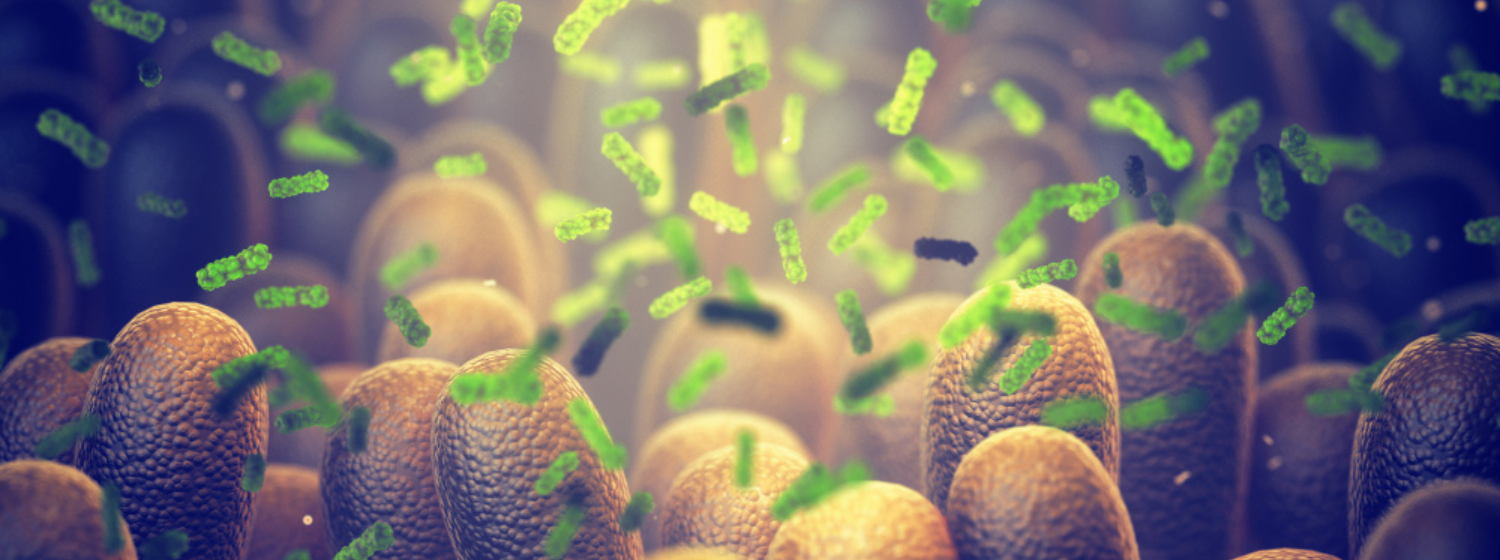
Your body houses entire ecosystems of microorganisms – bacteria, fungi, and viruses – that form microbiomes. We have a gut microbiome, a mouth microbiome, an armpit microbiome... These microbes are not merely along for the ride. They help us digest food, train our immune system, and protect us from harmful invaders. But like any ecosystem, balance is key. When that balance is disrupted, it can contribute to a wide range of conditions, from inflammatory diseases to neurological disorders.
For years, microbiome research was driven by a straightforward question: which microbes are present, and how do they differ between healthy people and those with a disease? This work revealed associations between microbial communities and a range of conditions. Increasingly, researchers are pushing beyond these correlations. The real question now is more ambitious: does the microbiome drive disease (and potential cures)?
At VIB and across the global research community, scientists are combining advanced data analysis with experimental models to untangle the mechanisms linking microbes to processes like inflammation and cancer. Rather than simply observing changes in microbiome composition, they are asking what those changes mean and how they influence the body (and the soil).

Of guts and brains
The conversation between your gut and your brain is where a deeper understanding of the microbiome can have a lot of impact. It may seem surprising, but the microbes in our intestines communicate with the nervous system in complex ways. For example, people with Parkinson’s disease often have an altered gut microbiome, accompanied by increased inflammation and a compromised gut barrier.
VIB researchers from the team of Roosmarijn Vandenbroucke (VIB-UGent Center for Inflammation Research) are testing whether changing the microbiome can influence the course of disease. In a trial, people with Parkinson’s disease received healthy gut bacteria from donors, a procedure known as fecal microbiota transplantation (FMT). The results are promising, with patients showing measurable improvements in symptoms. Building on these results, the VIB Grand Challenges CUPIDGUT project brings in an interdisciplinary team, including patient representatives and researchers from Ghent University Hospital, Ghent University, University Hospital Leuven, Leuven University, and Leiden University Medical Center, to pursue a large, multicenter study to confirm the findings.
Beyond Parkinson’s disease, there are links between the gut microbiome and multiple sclerosis, depression, and other neurological conditions. Perhaps the microbiome is not always a passive bystander; perhaps it can be an active player in disease processes.
In multiple sclerosis, for example, Jeroen Raes (VIB-KU Leuven Center for Microbiology) and his team have shown how specific microbiome signatures are linked to disease progression, raising the possibility (though at the moment far from a certainty) of using microbial data to predict disease and therapy outcomes.
Cancers and crops
In cancer research, too, scientists are reading the microbiome with an eye on better diagnosis and treatment. The teams of Lars Vereecke (VIB-UGent Center for Inflammation Research) and Han Remaut (VIB-VUB Center for Structural Biology) have even found that certain strains of E. coli bacteria in the gut promote colon cancer by binding to intestinal cells and releasing a DNA-damaging toxin.

The ‘microbiome view’ is not just relevant for human health. Similar principles apply to ecosystems far beyond the human body. In agriculture, for instance, scientists are exploring how microbial communities in the soil can improve crop growth and resilience. Beneficial bacteria and fungi can help plants resist disease, reduce the need for chemical inputs, and support more sustainable farming practices. What is becoming increasingly clear is that the microbiome is not just relevant for human health. Similar principles apply to ecosystems far beyond the human body. In agriculture, for instance, scientists are exploring how microbial communities in the soil can be harnessed to improve crop growth and resilience. Beneficial bacteria and fungi can help plants resist disease, reduce the need for chemical inputs, and support more sustainable farming practices.
Take another VIB Grand Challenges project, Soy in Flanders and its follow-up, Soy 2.0, as example. By leveraging nitrogen-fixing bacteria that form symbiotic relationships with plants, the team of researchers from VIB, Leuven University, ILVO, Ghent University, and Walloon Agricultural Research Center CRA-W, led by Sofie Goormachtig and Steven Maere (VIB-UGent Center for Plant Systems Biology), is looking to support the growth of soybeans in Flanders with acceptable yield without synthetic fertilizers. This work highlights the potential of microbiomes to contribute to more sustainable food systems and climate-resilient agriculture that benefits the farmers and the planet.

From the gut to the soil, microbiomes are emerging as powerful tools to address some of the most pressing challenges of our time.
From lab to patient or field
These advances are not just academic. Like microbes in the soil, they are feeding into a growing ecosystem of biotech innovation, where companies are developing treatments based on beneficial microbes designed to restore balance and target specific diseases.
Much of this progress has been made possible by a technological revolution in the way scientists study microbiomes. Traditional approaches often looked at microbial communities in bulk, missing crucial details about rare or slow-growing organisms. Today, new tools such as microfluidics and single-cell analysis allow researchers to zoom in at a much higher resolution.
In the future, the microbiome could become a routine part of medical care, helping doctors tailor treatments to individual patients. For example, VIB spinoff MRM Health focuses on developing combinations of gut microbes with beneficial therapeutic effects. They recently received Fast Track FDA clearance to start phase 2b trials for an ulcerative colitis treatment, and with the support of a VLAIO grant, they seek to refine treatments of immune-mediated inflammatory diseases.
Harnessing the power of the microbiome could, as we've seen, also play a significant role in developing more sustainable ways to produce food and protect the environment. VIB spinoffs Protealis and Aphae.bio, for example, use molecules made by soil microbes to develop protective seed coatings and biopesticides, respectively. Both companies recently received VLAIO grants and Protealis received European approval for their soybean seed coating, while Aphea.bio announced a partnership with biotech giant Bayer to develop bioinsecticides against sap-sucking insects.
And yet, despite all the progress, the field is still in its early stages. The microbiome is incredibly complex, shaped by countless factors including diet, lifestyle, environment, and long-term history.
On this Microbiome Day, one thing stands out: we are only beginning to unlock the potential of the microbial world. It’s time to start learning how to work with the invisible ecosystems all around (and inside) us. The future of human and planetary health may not only lie in our genes, but also in the microbes that live alongside us.

Gunnar De Winter