Meet Polina Novikova
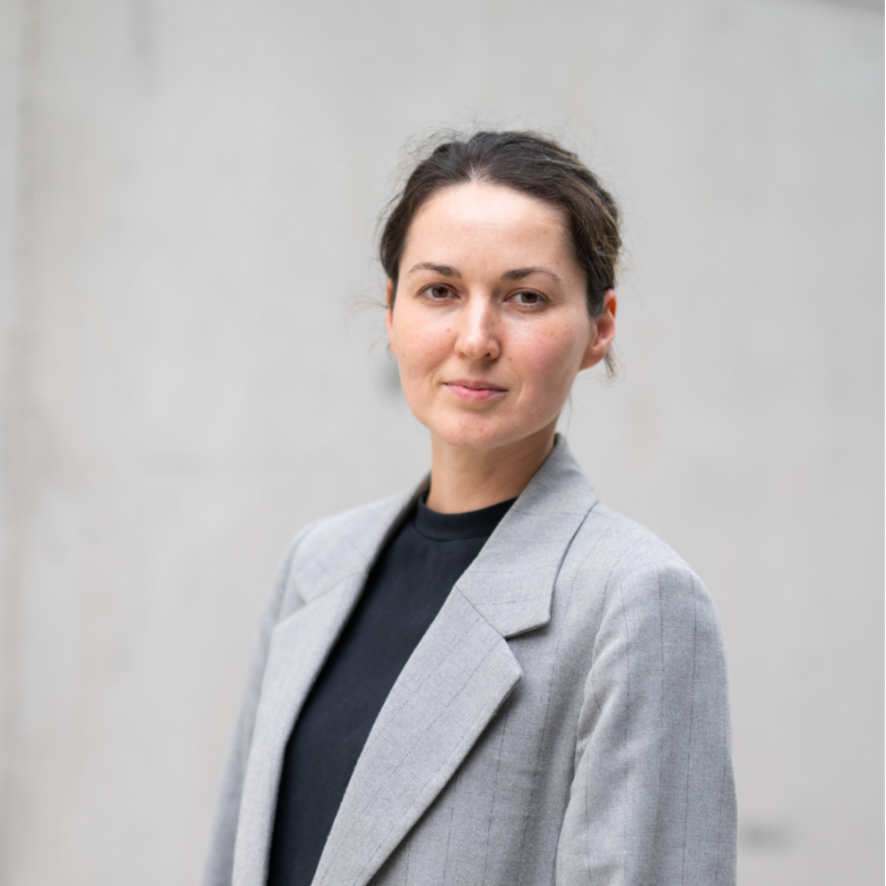
Polina Novikova joins the VIB-UGent Center for Plant Systems Biology
Coming from the Max Planck Institute for Plant Breeding Research, Polina Novikova joins the VIB-UGent Center for Plant Systems Biology (PSB) as Principal Investigator and UGent as Associate Professor. At PSB, Polina heads the Ecological Genomics lab, which looks at the roots of polyploidy, organisms with a doubled (or higher) amount of genome compared to a ‘normal’ organism.
Simon Tack, PhD student at PSB, asked her some questions.
Hi Polina and welcome to our center. Let me start with wishing you a happy new year so and my first question would be: What can I wish you for the new year, both on a professional and personal level?
Thank you and happy new year to you too! That is actually a though question. I have been busy with moving the labs so now it would be important to find a way to sit down. I still have a lab in Cologne and together with the new lab it has been a lot to juggle.
So I can wish you a final establishment?
Yes! To establish, to stabilize, to balance this whole process. That would be very useful. The same would be true at home. My daughter started a new school in September and luckily she has already adapted. She might be better adapted to the changes than I am (laughs).
So on a more ‘science-y’ note, your team focusses on unraveling the secret surrounding polyploidy adaptations and genome duplications. Could you briefly explain what polyploidy is exactly and why it is so interesting?
So polyploids are organisms with a doubled (or higher) amount of genome compared to a ‘normal’ organism. This might sound very scary but it is quite a common thing, especially in plants and specifically in plants we like to eat. Apparently humans selected for polyploids throughout history as they come with particular interesting phenotypes.
It happens in nature too, without human intervention, and that is what my lab is focused on. We study the natural genetic variation in general and polyploids are some of the interesting phenotypes we look into. They are especially interesting because they seem to thrive in stressful environmental conditions and we are trying to understand why. So in general we are interested in natural genetic variation and how it helps plants to adapt to a particular environment.
… which has of course become very relevant with the changing climate.
Yes indeed and we hope to help prepare for those changes.
What would be considered the major open question in polyploid field?
We still do not understand how polyploidy is related to environmental conditions. We see a lot of associations between polyploidy and extreme environments but whether the extreme environment triggers polyploidy or polyploids are just better adapted to the extreme environment compared to diploids, remains unclear. I think it might be both, it depends on the model and the particular plant species. So it remains unclear what triggers polyploidy. Is it genetics or the environment?
Also, how do these polyploids survive? Once a plant become polyploid, there are so many ways to go extinct and so little options to survive (both laugh). So why are these lucky ones still there? What did they do? So it is clear why humans selected for some polyploid crops but in nature it is much more difficult to understand how polyploid species comes to be and establish themselves. Being polyploid is costly. It costs a lot of energy, it affects fitness, in the beginning there are problems with meiosis,… so how can plants adapt to both this internal stressful environment of being a polyploid and external extreme environments? That is a big open question!

You are now a new, young PI but lets look to the future, to the time you might retire, granted these days that is quite a long time, what do you hope your research would be the foundation for?
It is hard to predict the future that far away. We are talking about quite some years and times are changing really fast. Five years ago I would not be able to predict where we are now. Yet, I hope that we, as a humanity, are able to grow particular crops with particular adaptive alleles for particular environments and geographies as such that we are able to feed all these people. That would be the ideal scenario. If we are able to do that than maybe there is hope.
Crop adaptation tailored to the environment would indeed be major accomplishment! Coming back to today: We all know the recent advances in AI and the impact it has on all branches of science. What would you consider the biggest benefits and pitfalls of AI towards the research in your group?
I think we can benefit quite a lot. To work well AI needs data and we accumulate a lot of that. For example our sequencing data can be used to train AI on that would than be able to predict the phenotypic effect of certain genetic changes. So AI needs the data to be trained and we need the trained AI to make sense of all that data in a manner that makes sense timewise and economically. It would be great to just sequence a bunch of (polyploid) plants and link the phenotype to the genetic changes.
The pitfalls… Well, we are all humans, right? We have to adapt to this new intelligence. Hopefully we will be able to adapt fast enough and if not we will go obsolete. And that is OK, than that retirement will not be that far in the future. (both laugh)
We know have a good idea on the science part of Polina Novikova but what if you were not a scientist? What would you be doing now?
That is interesting to think about. I am not really sure. I really like gardening so maybe I would be a professional gardener. The plant-aspect would still be there I guess. So maybe that is what I could do when the AI makes me retire earlier.
What would be an interesting non-science fun fact about you?
I was born in Baikonur.
Baikonur… which is of course in…
Baikonur is a city in Kazakhstan (I was born in the USSR, still), but it is being rented by Russia because of its space-port. This is where they launched the first satellite and where they still send rockets from towards the ISS.
As a last: what is the best (and worst) advice you've gotten in your research journey so far? This would be very interesting for young researchers such as myself.
The worst would be: ‘Work-work-work and the rest will follow’. It does not make sense. You would not be able to keep this up.
Related to that the best advice would be: leave enough space in your brain for enjoying life and being bored a little bit. Just bored enough to keep your imagination flowing, to keep yourself interested in what you do and to keep asking questions.
So find a balance between working hard and not too hard to lose interest.
Indeed, but that balance is different for everyone. I do not have the recipe and to be honest I am still looking for my perfect balance!
Well that was it! Thank you very much for making time. I wish you a swift establishment with the lab and let’s hope 2026 is the year were we can all find our perfect balance.
Want to be kept up-to-date on our biotechnological news and stories? Join our community and subscribe to our bi-monthly newsletter.