Proteomics for patients and society
How the VIB Proteomics Core is rebuilding its pipeline to power clinical studies, patient diagnostics, and biomarker discovery
The VIB Proteomics Core is rebuilding its pipeline, aiming for high throughput through faster sample preparation, cutting-edge mass spectrometry, and interactive data analysis. This upgrade is also part of unlocking something that matters enormously: the ability to contribute meaningfully to clinical studies that can have a direct impact on patients and society.
Getting the diagnosis right: The BE.Amycon Project
One of the most compelling applications is the BE.Amycon project, which focuses on amyloidosis, a complex and often misdiagnosed condition caused by abnormal protein deposits, known as amyloid fibrils, that accumulate in tissues and organs. Different types of amyloidosis require entirely different clinical approaches, so understanding exactly which proteins form these deposits is crucial for steering patients towards the right treatment.
An Staes, mass spectrometry expert at the VIB Proteomics Core, emphasizes that the most important goal is making sure the patient gets the care they actually need. But there are larger consequences for society too.
"Some of these treatments are expensive, and ensuring the right treatment reaches the right patient—and doesn't go to those who don't need it—has real ramifications for how healthcare resources are allocated responsibly, especially within Belgium's social welfare system."
So how does the Proteomics Core contribute to this important issue? The work relies on a shared pathologist who bridges two VIB facilities: the Spatial Catalyst, which brings together expertise in spatial omics technologies, and the Proteomics Core itself.
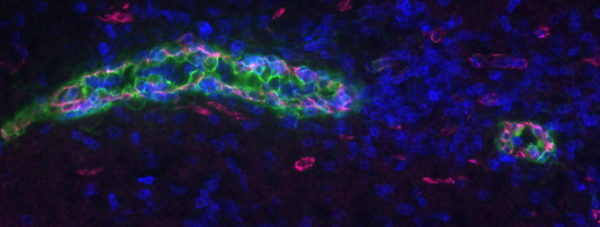
"The pathologist helps identify and isolate specific tissue regions from frozen and processed patient samples using laser microdissection, and those precise cuts are then analyzed by the Proteomics Core's mass spectrometers to identify the proteins present, enabling clear, unambiguous disease subtyping."
.jpg)

A recently published book chapter by scientists from the Proteomics Core and their collaborators details a robust and sensitive workflow specifically tailored to laser-capture microdissected FFPE tissue, demonstrating on clinical amyloidosis samples how precise isolation combined with sensitive mass spectrometry leads to the kind of accurate subtyping that directly improves patient diagnosis and treatment.
Finding needles in haystacks: Cancer biomarkers
The BE.Amycon project focuses on frozen tissue but there's a parallel effort happening with blood samples. In collaboration with the lab of Kris Gevaert (VIB-UGent Center for Medical Biotechnology), the Proteomics Core is analyzing extracellular vesicles from plasma, hunting for proteins and peptides that could serve as cancer biomarkers.
An points out that identifying reliable biomarker candidates requires large patient cohorts because subtle cancer signals only become statistically meaningful when measured across hundreds of samples. This is where the Core's high-throughput capacity becomes essential. With 96- and 384-well plate formats, hundreds of patient plasma samples can be processed and analyzed in a single run, giving researchers the statistical power they need to distinguish real biological signals from noise.
Exporting the expertise
The Proteomics Core's ambitions don't stop at optimizing their own workflows, An explains:
“While we are refining our in-house pipeline, we are also actively exploring how to export that expertise directly into clinical settings at places like UZ Gent. If a highly efficient proteomics pipeline can operate within a clinical environment, turnaround times shrink and proteomics becomes even more tightly integrated with clinical decision-making.”
From accurate disease subtyping to large-scale biomarker discovery to enabling hospitals to run these analyses themselves, the VIB Proteomics Core is showing what happens when high-throughput proteomics is pointed squarely at patient impact.