The 1000 Healthy Elderly study
How a unique decade-long cohort is helping CMN uncover early signals of dementia
Ten years ago, 1,000 older adults from across Flanders and Brussels participated in a VIB-UAntwerp Center for Molecular Neurology (CMN) study. Researchers collected their blood, administered cognitive tests, gathered medical histories, and genotyped their DNA. No one knew exactly what discoveries these samples might enable, only that aging and dementia research needed robust, longitudinal biobanking.
“We always believed this cohort would become scientifically invaluable,” says Julie van der Zee, who leads CMN’s biobanking efforts. “But the way it is now powering biomarker discovery has exceeded even our expectations.”
Today, that belief is being validated. The 1000 Healthy Elderly Study has entered its follow-up phase, and the cohort—now between 65 and 94 years old—is providing precisely the kind of long-term data that dementia researchers worldwide have been missing.
Why early detection matters now
Roughly 150,000 people in Flanders and Brussels live with dementia, and aging demographics suggest steep increases ahead. Meanwhile, new treatments like lecanemab are shifting clinical focus earlier, toward detection before extensive brain damage occurs. Yet general practitioners still lack simple, reliable tools to distinguish normal aging from pathological decline.
“People come to their GP worried,” says CMN group leader Kristel Sleegers. “They feel something has changed, but our current tests often cannot tell them clearly whether they should be reassured or referred. There is a huge gray zone.”
Existing diagnostics, such as PET scans or cerebrospinal fluid analysis, are too invasive or expensive for population-level use. Recently approved blood tests, including the p-tau217 assay, represent important progress but offer only a partial view.
“P-tau217 is a real step forward,” Sleegers explains. “But it focuses on one narrow aspect of biology. The early phase of dementia involves immune changes, vascular changes, metabolic changes… One or two proteins cannot capture that full complexity.”
This is exactly the gap the 1000 Healthy Elderly Study aims to fill.

A cohort revisited
Last year, CMN began recontacting the original volunteers. The response was extraordinary.
“Nearly 80 percent of the people we reached out to agreed to participate again,” van der Zee says. “For a cohort this old, after ten years, that level of engagement is remarkable.”
Participants return to CMN for a structured battery of tests: updated cognitive assessments, medical history and environmental exposure questionnaire, a blood draw, and new additions, including tear-fluid collection using a small paper strip placed at the corner of the eye.
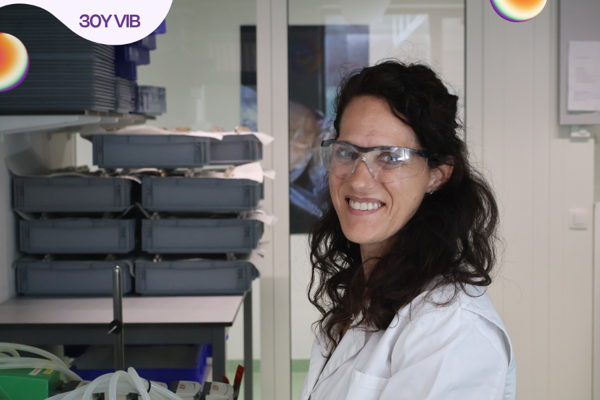
“It’s quick and non-invasive, and people accept it very easily,” says research nurse Sofie Van de kerckhoven. “Many volunteers feel proud to contribute again. Some come because dementia affected their families; others simply want to understand their own aging.”
These multimodal samples form a uniquely rich dataset, something almost no other aging cohort can offer at this depth or time span.

Rewinding the tape
At CMN, the renewed data are fueling a broad search for biological signals of cognitive decline. The approach is explicitly multimodal:
- Genetic risk profiling, in collaboration with Renzo Mancuso’s group
- Immune phenotyping, together with Emanuela Pasciuto’s lab
- Lipidomic and metabolic signatures of early disease
- Biomarkers of non-Alzheimer’s pathologies, such as LATE-NC
- Extracellular RNA and DNA, an innovative and underexplored class of biomarkers
“This extracellular RNA and DNA work is completely new in this context,” Sleegers says. “These fragments reflect transcriptional and epigenetic changes. They may give earlier or more integrative information than protein markers alone.”
The ten-year interval is not just a before-and-after snapshot. It allows researchers to model trajectories of decline or resilience. Valeria Malysheva’s team is developing algorithms capable of reconstructing the moment when an individual’s biomarker profile diverges from healthy aging.
“We want to go back in time and identify the tipping point,” Malysheva explains. “If we can pinpoint when resilience gives way to pathology, that tells us when intervention might be most effective.”

Why some decline and others don’t
Not everyone in the cohort is declining cognitively, and that is scientifically essential. Many participants remain stable, even at advanced ages. Some accumulate pathology without symptoms, others decline with far less measurable burden.
“Understanding resilience is one of the most exciting aspects of this study,” Sleegers says. “If we learn why some people stay cognitively healthy despite risk factors, that could open entirely new preventive strategies.”
Both converters and non-converters are equally valuable to the CMN team. The contrast between them may reveal which biological processes matter most, and which markers could serve as practical tools for general practitioners.
Bringing the findings to clinics
Discovering biomarkers is only the first step. CMN plans to validate the most promising candidates in a prospective study across memory clinics, enabled by long-standing collaborations with the Belgian Neurology (BELNEU) Consortium. This will test whether these markers identify risk accurately among real patients who present with subjective cognitive complaints.
Meanwhile, CMN is preparing for eventual clinical integration. In close collaboration with the Centre of Expertise on Dementia Flanders (Expertise Centrum Dementie Vlaanderen) and the Flemish Council of Older Persons (Vlaamse Ouderenraad). The team plans to develop communication toolkits and e-learning modules so general practitioners can understand and discuss dementia risk and biomarker results. Collaboration with the Centre of Expertise on Dementia Flanders aims to embed these materials into existing training pathways.
“We want GPs to have tools that are genuinely usable,” van der Zee says. “Something that helps them reassure people when appropriate, and identify those who need specialist evaluation.”
A long-term investment coming to life
The 1000 Healthy Elderly Study began as a visionary investment in the future of dementia research. A decade later, it is becoming precisely what CMN hoped: a platform for discovering early-warning biomarkers, understanding resilience, and informing policy for the next generation of care.
“This is a long-term commitment,” van der Zee emphasizes. “And the volunteers understand that. They are partners in this research.”
Ten years from now, as the cohort returns once again, the biomarkers developed today may already be part of routine primary care, helping GPs answer the question so many older adults ask: Is this normal aging, or should I act now?
Want to dive deeper into the 1000 Healthy Elderly study? Read the companion piece on Biovox!
Before the Fall: Catching Cognitive Decline Early with Citizen Science.