Germ-free mice and gut inflammation - Meet Lars Vereecke
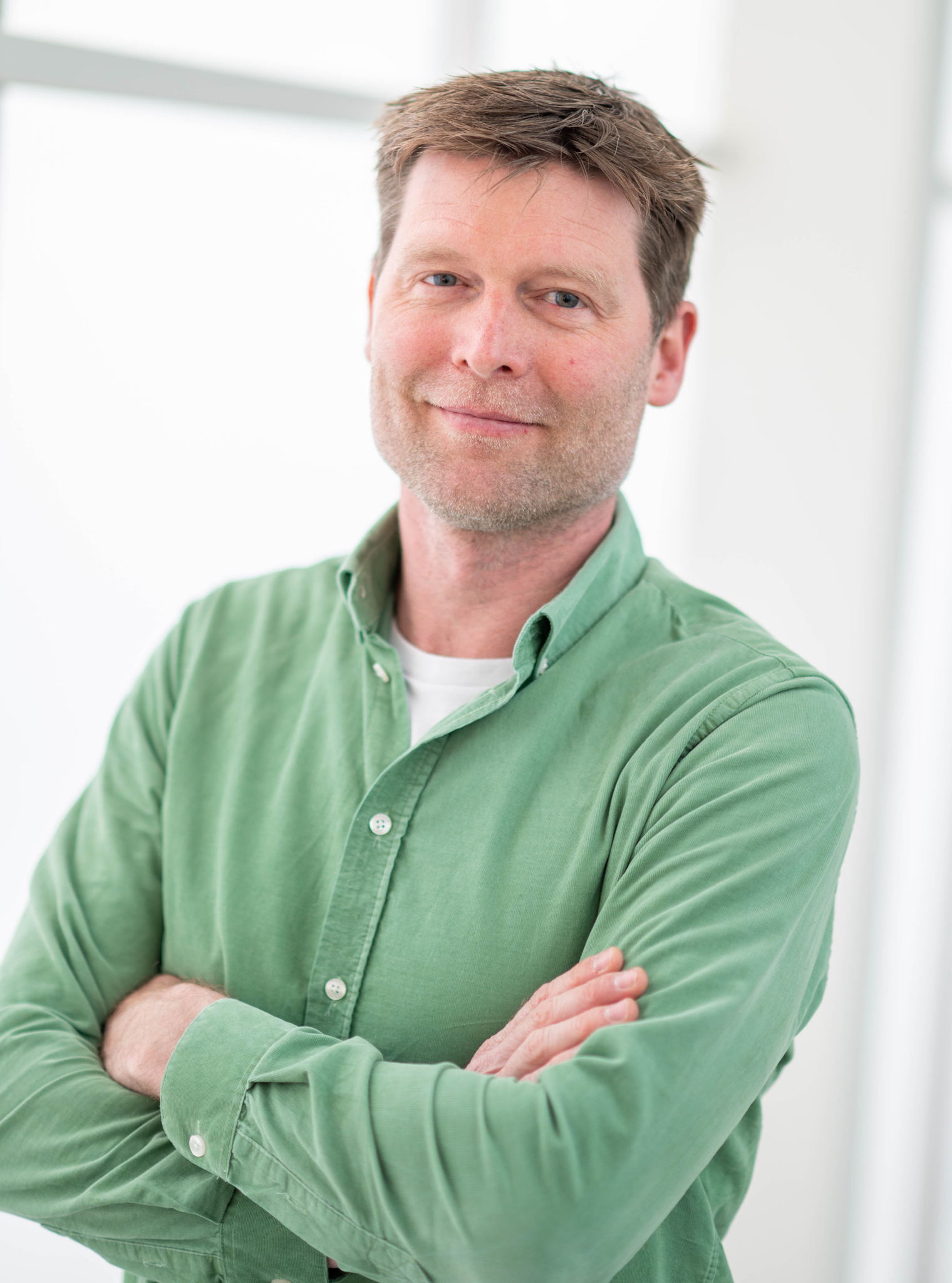
As newly minted VIB Expert scientist and associate professor at UGent, Lars Vereecke leads the Host-Microbiota-Interaction lab at the VIB-UGent Center for Inflammation research. His lab established the first Belgian germ-free and gnotobiotic mouse facility and is part of the Ghent Gut Inflammation group. He is also a group leader at the Cancer Research Institute Ghent (CRIG).
Hi, Lars. How did you get interested in host-microbiota interactions?
During my PhD and postdoctoral training, numerous microbiota profiling studies were published, showing consistent shifts in microbial composition across a wide range of human diseases. While interesting, these studies were largely descriptive and did not show evidence that microbiota changes causally drive disease development. Also, there are many pseudoscientific health claims around the microbiota. This lack of mechanistic understanding of the microbiota motivated me to focus on functional microbiota research.
At the VIB-UGent Center for Inflammation Research (IRC), we have access to a unique collection of transgenic mouse models that recapitulate key aspects of human disease. These models provided an ideal experimental framework to manipulate microbial communities and dissect host-microbe interactions in health and disease. Together, this motivated me to establish a germ-free and gnotobiotic mouse facility in Ghent, which also allowed me to develop a distinct research niche that integrated well within the existing research environment.

What are some of the major open questions in the fast-growing field of microbiome research?`
Despite major technological advances, such as metagenomic sequencing (at reduced sequencing costs) and other omics technologies, improved culture techniques, and advanced bioinformatics, it remains extremely challenging to fully capture microbiome complexity and to unravel the molecular basis of relevant host-microbiota interactions.
As a result, even simple questions, such as “what constitutes a healthy microbiome?”, remain difficult to answer. Microbial interactions are also highly dynamic and context-dependent, and are strongly influenced by factors such as diet, lifestyle, host genetics, and disease state.
Multi-omics approaches help to map this complexity. However, interpreting these high-dimensional datasets and linking them to specific host functions remains a major bottleneck. I believe AI-driven analytical approaches will be essential to integrate these complex datasets and extract mechanistic insight, which then require validation in targeted experimental systems, such as gnotobiotic mouse models. Ultimately, translating these insights into individualized assessments of microbiome health and into targeted, effective microbiome-based therapeutic interventions remains one of the key challenges for the field.
If you weren’t a scientist, what other work would you like to do?
That’s a difficult question, because science has always been my primary passion. However, I can also be fascinated by people who are passionate experts in completely different fields. Topics like economy and journalism also seem very appealing to me. Nonetheless, I’m very happy as a scientist.
What do you hope your research will be the foundation for fifty years from now?
I hope my research will ultimately contribute somehow to the development of microbiota-based interventions, either diagnostic, preventive, or therapeutic. This includes defining microbial functions that modulate disease risk or treatment response and identifying harmful microbes that increase susceptibility to diseases like colorectal cancer, where incidence is rising alarmingly in younger populations. If my work helps the development of microbiota-based strategies that ultimately reach patients, that would be fantastic.
What is the best (and worst) advice you've gotten in your research journey?
The best is “be active, not reactive.” I heard this during a VIB career training early on, and it has stayed with me. I believe it’s not a good strategy to always wait for opportunities, decisions, or validation from others. Instead, think ahead and take active steps that help define your future.
As for the worst, I’ve been fortunate to work in a highly supportive and innovative research environment, and I can’t recall any specific advice that had a lasting negative impact.
Want to be kept up-to-date on our biotechnological news and stories? Join our community and subscribe to our bi-monthly newsletter.