Why art-science initiatives are suddenly everywhere and why they matter more than ever
Art-science collaborations are no longer niche experiments on the fringes of academia; in 2026, they have become one of the most dynamic, evidence-backed movements reshaping how we understand health, society, and scientific innovation. Their impact is visible not only in major research breakthroughs but in the lived experience of people working across labs, clinics, museums, and community spaces, from Anna Dumitriu’s work on molecular disease and patient experience to the #ArtGenetics project, where paintings become datasets and museum visitors help trace the evolution of crops through visual culture. Together, these initiatives show how art can illuminate scientific complexity, how public participation can meaningfully contribute to research, and how creativity itself can function as a method for generating knowledge.
By Bethan Burnside
The evidence base for art–science
The momentum behind art-science initiatives reflects a profound shift in how researchers, clinicians, and policymakers understand the relationship between creativity and human health. Earlier this year, Nature published a widely-shared letter from molecular biologist and artist Palina Kot, arguing that art-science collaborations are no longer peripheral experiments but essential infrastructures for modern research ecosystems.
Kot shows how artistic methods reveal blind spots in biomedical research, strengthen public trust, and help scientists communicate uncertainty - a challenge that traditional science communication often struggles to meet. This argument lands at a moment when effective science communication is urgently needed, and where funding cuts across research systems have made it more important than ever to communicate the value of science clearly and compellingly. Yet despite this need, art-science collaborations, one of the most powerful ways to make science visible, relatable, and emotionally resonant, remain far too rare.
This growing recognition is reinforced by new research emerging from University College London (UCL). In January 2026, UCL’s Population Health Sciences division released Art as Cure, Science as How: How Arts Transform Our Health, a widely anticipated book co-authored by Professor Daisy Fancourt, one of the world’s most influential researchers in arts and health. Fancourt’s work has consistently demonstrated that engagement with the arts improves patient outcomes, enhances clinician empathy, and supports public health literacy. Her earlier research laid the groundwork for understanding how creative practices help people navigate illness when language fails. The new book expands this evidence base, showing that the arts are not simply expressive but deeply physiological, shaping stress responses, immune function, and recovery trajectories.

By May 2026, the scientific case for art-science strengthened even further: The Guardian reported new findings from UCL that showed that arts and cultural engagement are linked to slower biological ageing. The research team measured epigenetic markers associated with the pace of aging, and found that individuals who regularly engage with the arts exhibit a measurably slower biological aging trajectory. This striking result reframes cultural participation as a public health intervention rather than a leisure activity, making it a finding that’s hard for policymakers to overlook. Taken together, these developments form a clear narrative: art-science initiatives are gaining traction because they work.
When neuroscience invites art in
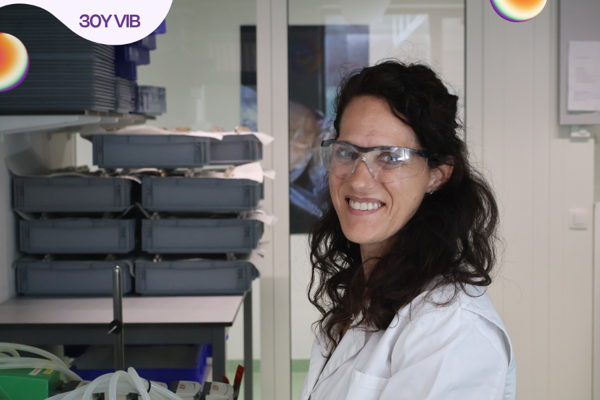
At VIB, the meeting point between neuroscience and bioart has become one of the most compelling examples of how art-science collaborations can reshape research culture. As a science communicator at the VIB-KU Leuven Center for Neuroscience, I have spent the past few years actively building bridges between scientists and artists, a commitment I reflect on in an interview in The SciArt Curator, where they reflected on how these collaborations matter not because art decorates science, but because creativity expands the ways scientists think, question, and communicate. Their perspective is grounded in the belief that interdisciplinary exchange generates forms of knowledge neither field can produce alone.
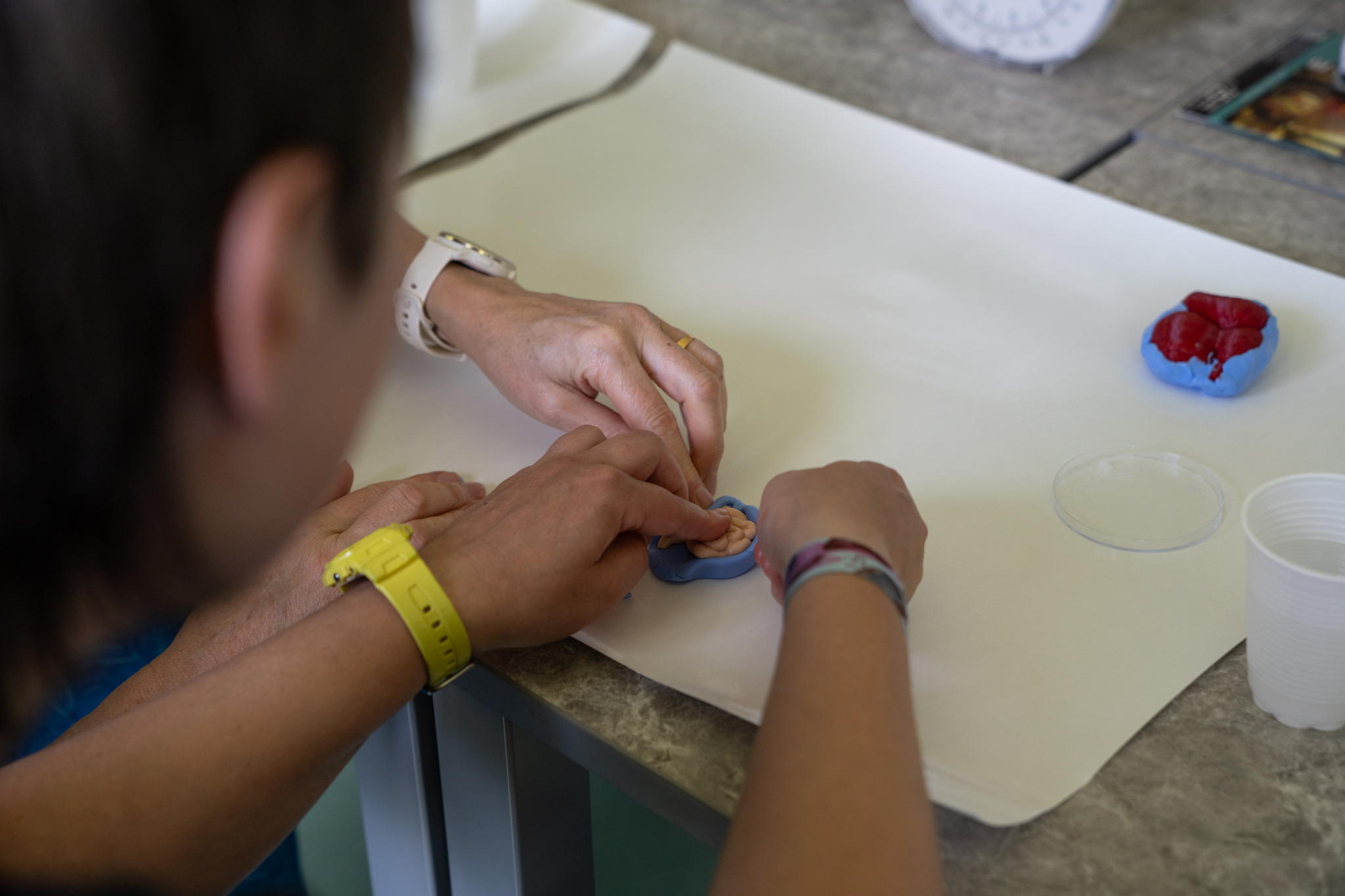
When I invited internationally renowned bioartist Anna Dumitriu to begin a residency within the neuroscience labs last year, this philosophy came to life. Dumitriu embedded herself directly into the research environment, working alongside clinicians, researchers, and technicians. What began as an exploratory residency quickly expanded into a multi‑stakeholder project that wove together molecular biology, patient narratives, and artistic experimentation.

.jpg)


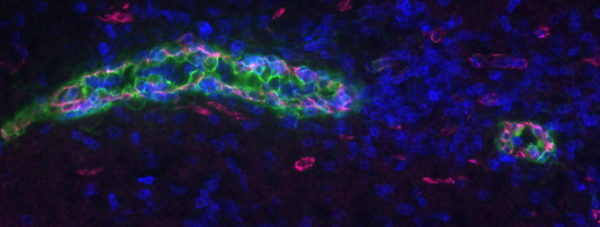
This year, the residency entered a new phase focusing on amyloidosis, a rare and life‑limiting illness caused by the build‑up of misfolded amyloid proteins in organs and tissues. Dumitriu’s project brought together researchers studying the disease, clinicians treating patients, and individuals living with the condition, creating a shared space where scientific data and lived experience could inform one another.
Her artwork, the ‘Amyloid Necklace’, formally premiered at the FENS Forum in July 2026; Europe’s largest international neuroscience meeting, where thousands of researchers gather to share cutting‑edge work across brain science. Here, Dumitriu took part in a panel discussion on Communicating Neuroscience through Art. The session on art-science collaborations was so oversubscribed that people stood along the walls and spilled into the doorway, indicating how much appetite there is for new ways of thinking about neuroscience.
The art-science residency with Anna Dumitriu was curated by Bethan Burnside, in collaboration with and supported by the VIB-KU Leuven Center for Neuroscience, BE.Amycon (a VIB Grand Challenges project), and the Switch lab, working hands-on alongside researchers Rodrigo Gallardo, Meine Ramakers, and Gemma Martinez-Rivas to develop the artwork. This project was supported by Koning Boudewijnstichting.


Making sense through making art
After the announcement of Anna Dumitriu’s amyloidosis‑focused residency, a message arrived on Instagram from someone quietly following the project: an artist living with amyloidosis who had been making work about their illness for years. That artist was Karen Lintott, whose 2021 paper is a thoughtful exploration of how art becomes a survival tool in the face of rare disease.
Lintott’s work is rooted in the diagnostic process itself. They write that “visual artwork is a means for the artist to communicate… I had a desire to make sense of what was happening to me,” describing how they turned MRI scans, kidney biopsy slides, and blood test imagery into textile‑based artworks, their process mirroring the medical procedures they underwent. They explained that, “The process of making art can be therapeutic in that it allowed me to focus on something other than my condition and allowed relaxation and transcendence...” The sentiment captures how art can reorganize the chaos of illness into a meaningful narrative that biology alone cannot provide.
Lintott’s work aligns with the growing recognition that scientific communication is strongest when it is grounded in lived experience: across science communication research, there is increasing consensus that when people directly affected by disease are part of the storytelling, the science becomes more trustworthy, more resonant, and more ethically anchored.
By now, evidence continues to accumulate that creative activity induces states similar to meditation, enhances brain functioning, alleviates depression, and produces alpha‑wave patterns associated with restful alertness. Lintott’s practice resonates with a lineage of artists who have used art to confront the invisibility of internal disease. One such artist, Jo Spence, famously asked, “How do you make leukaemia visible? Well, how do you? It’s an impossibility” and concluded that the only honest answer was to represent how it felt. While Dumitriu’s amyloidosis project was already designed to bring together researchers, clinicians, and patient communities, Lintott’s message demonstrated how these collaborations ripple outward, reaching people who are navigating the same disease in their own ways.
The biological record inside visual culture
Art-science collaborations take many forms, and one of the most unexpected comes from VIB’s #ArtGenetics project — a partnership between plant scientist Ive De Smet and art historian David Vergauwen that used paintings as scientific data. By analysing how artists depicted fruits, vegetables, and crops across centuries, the project turned museum collections into research archives, revealing how domesticated plants have changed over time. In this context, art became a scientific tool and visual culture a record of agricultural evolution, showing how meaningful scientific discovery can emerge from cultural spaces and how people who may never consider themselves “scientists” can still contribute to research.

This approach is explored in depth in De Smet and Vergauwen’s article in Frontiers in Plant Science (2021), where they reflect on what their collaboration reveals about interdisciplinary research. Rather than treating paintings as illustrations, they argue that artworks can function as historical datasets, capturing morphological details of crops long before systematic botanical documentation existed, which immediately brought to mind a painting at the GUM “Forum for Science, Doubt & Art” in Ghent, where an early plant‑sorting system includes mushrooms in categories that modern DNA testing would place elsewhere. The museum explains that, before molecular tools, classification relied on sight, intuition, and careful looking, all elements where art and science overlapped more than we tend to acknowledge. The #ArtGenetics project extends that same logic into contemporary research, showing how visual culture can preserve biological information and how interdisciplinary methods can reveal patterns that would otherwise remain hidden.
This blending of art, visual analysis, and biological inquiry also reveals something deeper about how knowledge is made. It challenges the assumption that science must be confined to laboratories or that data must come from controlled experiments. Instead, it shows that scientific insight can emerge from curiosity, from collective interpretation, and from the cultural record itself. It demonstrates that the boundaries between disciplines (art, history, botany, genetics...) are far more porous than we often assume, and that crossing them can open entirely new avenues of discovery.
The shift toward art-science
By early 2026, it became clear that the rise of art-science was beginning to reshape policy. In March, the European Commission’s Policy Lab published a blog post that marked a turning point in how Europe imagines the future of research and innovation. Rather than treating art-science collaborations as experimental side projects, the article positioned them as part of the EU’s strategic agenda for interdisciplinary research, public engagement, and health innovation.
The newly formed EU Art-Science Policy Group reflects this shift, whereby artists and science communicators are now involved in shaping policy frameworks that influence funding, research priorities, and cross‑sector collaboration. This shift recognises what researchers, artists, and patient communities have been demonstrating for years: art-science is not a niche interest but a powerful mode of knowledge production with real societal impact.
What’s emerging are not simply more art-science initiatives, but a fundamental reframing of what art and science are for. A growing body of research argues that creativity is not an optional enhancement to scientific practice, but actually essential for innovation. For instance, the recent perspective “Why Science Needs Art” highlights how scientific inquiry relies on capacities cultivated in the arts including imagination, interpretive thinking, and the ability to navigate ambiguity, while learnings from art-science collaborations at the Joint Research Centre (JRC) argue for the value of creatives embedded within research and development teams in anticipating societal impacts, challenging assumptions, and generating novel conceptual frameworks.
The convergence of art and science is accelerating for reasons that are becoming impossible to ignore. Institutions like VIB are demonstrating how artists can meaningfully contribute to science, disease research, and patient engagement, while people living with illness are showing how art can become a tool for communication and meaning‑making. EU policy is starting to integrate art-science into its research and innovation agenda, ensuring that these collaborations are supported, resourced, and scaled.
Art-science is transforming how we understand knowledge, health, and participation: humanizing science, democratizing expertise, and opening new ways of interpreting complex realities. It creates the conditions for questioning how research is done, who gets to contribute, and how scientific stories are told. And it shows that when art and science work together, they don’t just enrich each other, but fundamentally expand what is possible.

Bethan Burnside